



Rooftop Solar Is Now Mandatory in Europe - A Complete Guide to the EPBD Solar Requirements
Legal basis: Directive (EU) 2024/1275 of the European Parliament and of the Council on the energy performance of buildings (recast), commonly known as the EPBD. Published in the Official Journal of the EU on 8 May 2024, it entered into force on 28 May 2024. EU Member States are required to transpose it into national law by 29 May 2026.
What Does This Directive Actually Require?
In plain terms: the EU has passed a legally binding directive requiring buildings across Europe - from schools and hospitals to offices, warehouses, and new homes - to install rooftop solar on a phased schedule. These are hard deadlines written into the directive itself, not voluntary targets or policy recommendations.
Two forces drove this policy:
Energy security. The 2022 energy crisis exposed Europe's dangerous dependence on imported natural gas. The EU estimates that the full rooftop solar potential across Europe could meet approximately 25% of the bloc's total electricity consumption, offering a meaningful path toward energy independence.
Climate commitments. Buildings account for 40% of total energy consumption in the EU. Decarbonising the built environment is essential to meeting the EU's binding targets: 45% renewable energy share by 2030, and a fully decarbonised building stock by 2050.
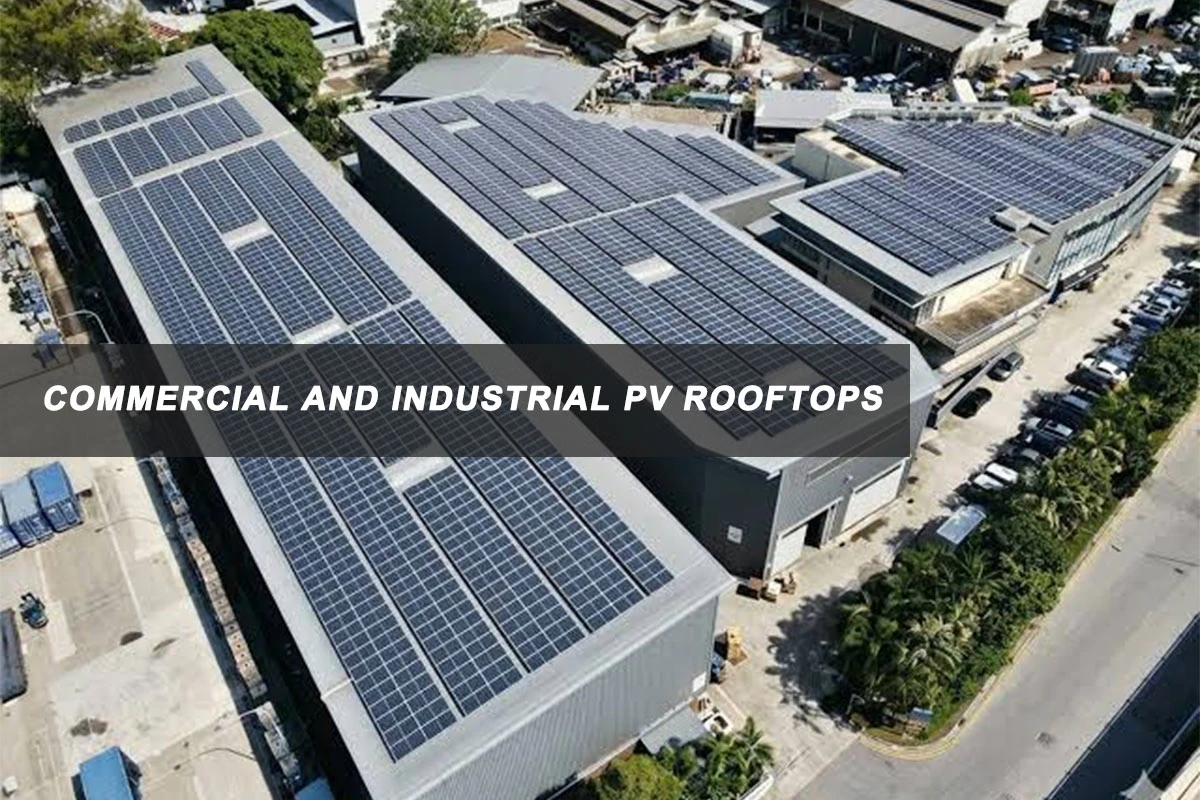
Requirement One: All New Buildings Must Be "Solar-Ready" (From 29 May 2026)
Article 10 of the directive establishes this as a baseline obligation. Any new building submitting a permit application from 29 May 2026 onwards must be designed as "solar-ready" from the outset, regardless of size or type:
Roof load-bearing capacity and orientation must be designed to accommodate solar panels;
Cable conduits, structural reinforcement points, and installation routes must be pre-installed so that solar panels can be added later without major structural works;
Façades, canopies, and parking canopies must also include provisions for solar integration.
The logic is straightforward: building solar compatibility into the design phase now costs far less than retrofitting it later. SolarPower Europe estimates that solar-ready design can improve return on investment by 8–11% compared to retrofitting panels on buildings not designed with solar in mind.
Requirement Two: Mandatory Solar Installation - The Full Timeline
This is the most closely watched part of the directive. Different building types face different deadlines. The table below reflects the complete schedule as set out in Article 10 of Directive (EU) 2024/1275:
New Buildings
|
Deadline |
Building Type |
Requirement |
|
31 December 2026 |
New public and non-residential buildings with useful floor area > 250 m² |
Solar installations must be in place upon completion; includes government offices, schools, hospitals, retail, warehouses, office buildings |
|
31 December 2029 |
All new residential buildings (houses and apartments, no minimum size) |
Mandatory rooftop solar on all new homes |
|
31 December 2029 |
All new roofed car parks physically adjacent to buildings (with more than 3 spaces) |
Solar panels required on roofed parking structures |
Existing Buildings - Non-Residential
|
Deadline |
Building Type |
Trigger |
|
31 December 2027 |
Existing non-residential buildings with useful floor area > 500 m² |
When the building undergoes a major renovation, or any work requiring an administrative permit - including rooftop works or installation of a building technical system |
Existing Buildings - Public Buildings (Phased by Size)
|
Deadline |
Building Size |
Requirement |
|
31 December 2027 |
Existing public buildings > 2,000 m² |
Solar installation required, regardless of renovation |
|
31 December 2028 |
Existing public buildings > 750 m² |
Solar installation required, regardless of renovation |
|
31 December 2030 |
Existing public buildings > 250 m² |
Solar installation required, regardless of renovation - no renovation trigger needed, no grace period |
Notes on measurement and standards:
The area threshold is based on useful floor area (the floor area used as a parameter for energy calculations, as defined in the directive). Member States may alternatively use ground floor area, provided they demonstrate the resulting installed capacity is equivalent.
The minimum installed capacity is not set by the directive itself. Each Member State defines its own minimum standard when transposing the directive into national law (typically no less than 10 W per m² of floor area).
All solar installation obligations apply only where technically suitable and economically and functionally feasible.

Who Can Apply for an Exemption?
The directive allows for three categories of exemption, but each must be assessed and approved by the relevant national or local authority - building owners cannot simply self-declare an exemption:
|
Exemption Category |
Examples |
|
Technical infeasibility |
Persistent heavy roof shading; structural incapacity to bear panel loads; listed heritage buildings; specialist cleanroom facilities where rooftop modifications are prohibited |
|
Economic infeasibility |
Solar payback period exceeds the threshold set by the Member State (Member States set their own benchmarks; commonly cited figures are in the range of 12–15 years) |
|
Functional conflict |
Roofs used for agricultural purposes, cold-chain refrigeration equipment, industrial exhaust or heat dissipation systems incompatible with panel installation |
One important clarification from the European Commission's official guidance: grid capacity constraints are not a valid reason for exemption. Where grid-related issues arise, the directive requires that alternative solutions - self-consumption, battery storage, energy sharing - be explored first. Only if those options are also infeasible may a deferral be considered.
What Happens If Buildings Are Not Compliant?
The directive establishes a three-tier enforcement chain:
Tier 1 - EU against Member States. Any Member State that fails to transpose the directive into national law by 29 May 2026 can face infringement proceedings before the Court of Justice of the EU, with potential financial penalties.
Tier 2 - Member States against developers and building owners. When transposing the directive, Member States must put enforcement mechanisms in place. The standard approach is:
New buildings without required solar installations will not receive completion certificates or occupancy permits;
Renovation works that fail to include required solar installations will not receive construction permits.
Tier 3 - Annual progress reporting. Member States must submit annual data on rooftop solar deployment progress to the European Commission's Directorate-General for Energy, feeding into the EU's energy transition monitoring framework.
Member State Transposition: Progress Varies Significantly
As of mid-2026, Member States are at very different stages of converting the EU directive into binding national law. This matters in practice, because the directive's provisions are not directly applicable - they only take effect once transposed into national legislation.
|
Country |
Transposition Status (as of mid-2026) |
|
Germany |
Has existing regional-level solar obligation experience; transposition progressing actively |
|
France |
Already has a 2023 rooftop solar mandate for commercial buildings; well-positioned to align with EPBD requirements |
|
Netherlands |
Key provisions including Zero-Emission Building (ZEB) requirements still being drafted; political uncertainty may cause delays |
|
Spain |
Public consultation underway; no draft legislation published yet |
|
Italy |
No publicly available transposition progress information as of mid-2026 |
Practical implication: If you have building projects in Europe, you need to check both the EU directive text and the specific national transposition legislation in the relevant country. National laws may be stricter than the directive, may define exemptions differently, or may have set different minimum capacity thresholds. When the two diverge, local law governs.

What This Means for the Solar Industry
A few numbers put the market scale in context:
SolarPower Europe estimates the EPBD's rooftop solar provisions could drive 150–200 GW of new rooftop solar installations across Europe in the coming years;
The EU's stated target under the Solar Energy Strategy is 600 GW of total solar capacity by 2030;
The full potential of European rooftops could meet approximately 25% of the EU's electricity demand.
For solar module and system suppliers, the EU rooftop market represents one of the most structurally certain sources of demand growth over the next several years. However, it is worth noting that European requirements around local supply chain content, carbon footprint disclosure, and product certification compliance are tightening in parallel. Market access is no longer simply a matter of price competitiveness.
explanation
This article is based on the text of Directive (EU) 2024/1275 as published in the Official Journal of the European Union, the European Commission's official Article 10 guidance document (Annex 8, C/2025/6438), and publicly available Member State transposition information current as of June 2026. This article is for informational purposes only. For specific compliance decisions, consult the transposed national legislation in the relevant jurisdiction and seek professional legal advice.