



Why Philippine Companies Are Buying Solar Panels Directly From China in 2026
TL;DR:
The Philippines now has the highest residential electricity prices in Southeast Asia, and in the first four months of 2026 alone it imported more than 4 GW of Chinese solar panels - making it China's second-largest export market for solar modules, behind only the Netherlands. Faced with long lead times, marked-up prices from local middlemen, and a new wave of stricter product certification rules, more Philippine installers, EPC contractors, and distributors are now going straight to Chinese factories for lower prices, faster delivery, and more reliable quality control.
A News Story That Reveals a Bigger Shift in Philippine Solar Procurement
In July 2026, pv magazine reported that Chinese solar panel exports hit record levels in March and April, with energy think tank Ember estimating that more than 3 GW of additional Chinese panels were headed for the Philippines in that period alone. That finding builds on an earlier Ember report from May 2026, which found that more than 4 GW of Chinese solar panels were imported into the Philippines between January and April 2026 - a volume that puts the Philippines second only to the Netherlands (a transshipment hub for much of Northwest Europe) as a destination for Chinese solar exports worldwide.
Almost in parallel, a second story caught the industry's attention: the Philippine Department of Trade and Industry (DTI) formally began the process of placing solar equipment - PV modules, inverters, battery energy storage systems (BESS), rapid shutdown devices, battery charge controllers, and PV cables - under its mandatory product certification program. Going forward, products sold in the Philippines will need to carry both a PS Safety Mark and an Import Commodity Clearance (ICC) certification.
These two stories are not unrelated.
Together, they point to the same underlying reality: the Philippine solar market is expanding rapidly, and almost the entire supply chain behind that growth is built on Chinese manufacturing. For Philippine installers, distributors, and commercial energy users, this raises an increasingly practical question - why keep paying markups to local middlemen when you can work directly with the factory? That question is the focus of this article.
The Philippines Is Now China's Second-Largest Solar Export Market
The numbers speak for themselves. According to Ember's analysis of United Nations Comtrade data, net solar panel imports into the Philippines rose from US$365 million in 2024 to US$483 million in 2025. Because average module prices kept falling over that same period, the actual volume increase was even steeper: import capacity jumped from 3,130 MW to 5,068 MW, a 62% rise.
Of those 2025 imports, 98% came from China - an extraordinarily high concentration by the standards of any major solar market, and clear evidence that the Philippines' solar supply chain is now structurally tied to Chinese manufacturing. Interestingly, around 14% of that value was re-exported, with the United States emerging as a major re-export destination for the first time starting in September 2025 - a sign that the Philippines is also becoming a regional solar trading and distribution hub, not just an end market.
For Chinese exporters, the Philippines has moved from "emerging market" to "core growth market" almost overnight. For Philippine companies, having a direct, reliable sourcing channel into China is quickly shifting from a nice-to-have to a competitive necessity.
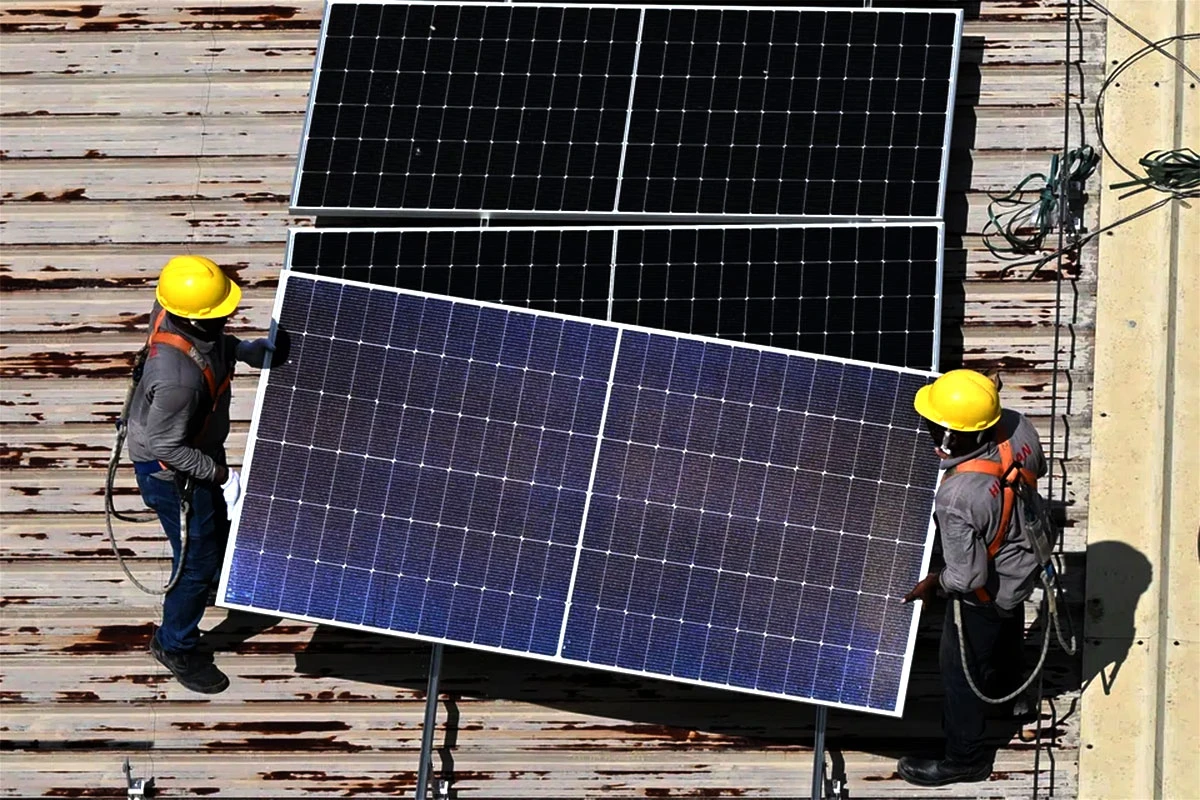
Why? Three Forces Pushing Philippine Buyers Straight to Chinese Factories
The boom in Philippine solar demand isn't a coincidence - it's the result of three forces converging at once:
Electricity prices keep climbing, sharply shortening the payback period on solar investments for both households and businesses.
Chinese module prices keep falling, thanks to manufacturing scale and global overcapacity, pushing procurement costs to record lows.
Local distribution costs remain high, with multiple layers of markup, unpredictable lead times, and inconsistent inventory pushing more buyers to bypass middlemen entirely.
Let's look at each of these in turn.
Why Are Electricity Prices in the Philippines Rising So Fast?
The Philippines currently has the highest residential electricity prices in Southeast Asia - and among the highest in the world. The root cause lies in its power mix: roughly three-quarters of the country's electricity generation depends on imported coal and liquefied natural gas, almost all of which is sourced on international markets. That leaves Philippine electricity prices highly exposed to swings in global energy prices.
In early 2026, conflict in the Middle East pushed fossil fuel prices sharply higher. By May 2026, Meralco - the country's largest power distributor - had raised retail electricity tariffs by 17% for residential customers, 18% for commercial customers, and 14% for industrial customers compared to a year earlier. President Ferdinand Marcos Jr. responded by declaring a national energy emergency and announcing plans to fast-track 1.4 GW of new renewable energy capacity.
For ordinary Filipino households, electricity already accounts for a significant share of monthly spending. For commercial and industrial users, high daytime power costs are eating directly into margins. This explains why, according to Ember's Asia energy analyst Alnie Demoral, commercial and industrial customers were the first to move to solar - their heavy daytime electricity use means some businesses now recoup their investment in as little as 2.3 years, down from around 3 years before the price surge. Residential payback periods have also fallen, from roughly 4 years to about 3.1 years, aided by the spread of leasing models and low-interest instalment loans.
In short: the higher electricity prices climb, the more compelling the economics of solar become - and the more urgent the need to secure a reliable, cost-effective module supply.
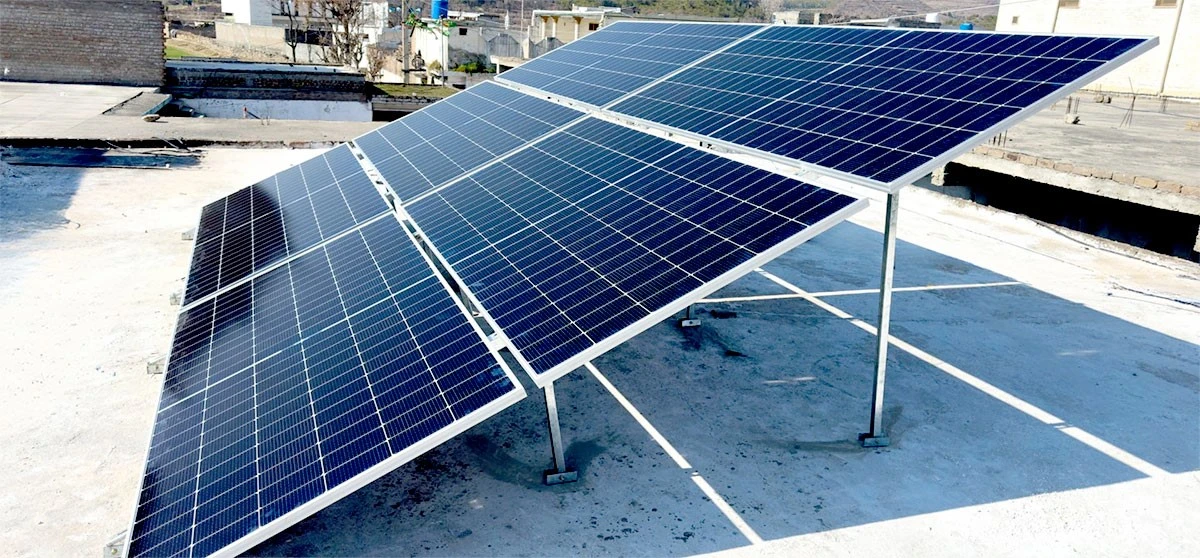
Why Do Chinese Modules Hold Over 90% of the Philippine Market?
Chinese solar panels' dominant position in the Philippines - 98% of imports by volume in 2025 - comes down to four structural advantages:
Cost advantages from manufacturing scale. China has the world's most complete solar supply chain, from polysilicon and cells through to finished modules, all largely produced domestically. That scale drives down cost per watt in a way few other countries can match.
Global overcapacity keeps prices falling. Over the past two years, global module manufacturing capacity has grown faster than demand, pushing prices steadily lower - a trend that disproportionately benefits price-sensitive emerging markets like the Philippines.
Geographic and logistical proximity. The short sea route between the Philippines and China's major solar manufacturing hubs (Guangdong, Jiangsu, Zhejiang) means lower freight costs and shorter lead times than sourcing from Europe, the US, or elsewhere.
A mature, full-range product ecosystem. From small residential balcony modules to large-scale commercial and utility-grade panels, Chinese manufacturers can typically supply either from stock or through custom production runs, covering everything from rooftop residential systems to full utility-scale plants.
Together, these factors give Chinese modules an edge in price, lead time, and product range that few competitors can match - which is exactly why "buying direct from China" has become the common thread running from individual Philippine installers all the way up to large EPC contractors.
Where Do Philippine Installers Typically Source Their Modules?
Right now, Philippine solar procurement generally falls into one of three channels:
Local distributors and wholesalers. Historically the most common route - fast local delivery, small-batch availability, and local after-sales support. The downside: prices are typically 15–30% higher than factory-direct pricing, and distributor inventory is often limited to a narrow range of models, with little room for customization.
Third-party trading companies or sourcing agents. These middlemen handle contact with Chinese factories, logistics, and customs clearance on the buyer's behalf. The barrier to entry is low, but pricing transparency is limited, markups are hard to verify, and quality disputes can fall into a grey zone of unclear responsibility.
Direct factory sourcing or one-stop export partners. This is the fastest-growing model over the past two years. Installers, EPC contractors, and larger distributors now work directly with export-ready, fully certified Chinese manufacturers - cutting out the markup layers while gaining more flexibility on customization (power rating, dimensions, frame color, certification standards, and more).
As the Philippine solar market continues to scale, more buyers now purchase enough volume to justify full-container-load (FCL) shipments, making direct factory sourcing increasingly attractive from a pure economics standpoint - this is precisely the trend the title of this article refers to.
Buying Directly From China: How to Avoid Getting Scammed
The biggest risk in cross-border procurement isn't price - it's the fact that you often can't see the factory, the production process, or the true condition of the goods before they're loaded onto the container. Here's what Philippine buyers should verify before working with a Chinese supplier:
Verify the supplier's credentials. Ask for the business license, export license, and original (or independently verifiable) certificates from recognized third-party bodies such as TÜV, CE, or UL - never accept a screenshot of a PDF as proof.
Conduct or commission a factory audit. For large orders, use a third-party inspection agency (such as SGS or Bureau Veritas) to perform a factory audit and a Pre-Shipment Inspection to confirm the supplier has real production capacity, rather than subcontracting orders out under a shell company's name.
Be wary of prices that are far below market rate. The raw material costs behind a solar module - polysilicon, silver paste, glass, aluminum framing - are relatively transparent. A price that's significantly below the industry average often signals inflated power ratings, substandard materials, or unclear product grading.
Put everything in the contract. Power tolerance, warranty terms (module power warranties are typically 25–30 years), inspection and acceptance criteria, and liability for breach should all be spelled out explicitly - never rely on verbal assurances.
Stage your payments. Where possible, use a letter of credit (L/C) or a staged payment structure (e.g., 30% deposit, 70% against a copy of the bill of lading) rather than paying in full upfront to a new supplier with no track record.
The short version: checking credentials, certifications, and third-party inspection reports will always tell you more than the number on a quotation.

How to Choose the Right Chinese Solar Module Manufacturer
With thousands of Chinese solar manufacturers to choose from, Philippine buyers can narrow the field using the following criteria:
|
Evaluation Criteria |
What to Look For |
|
Production capacity & scale |
Tier-1/Tier-2 brand status, consistent annual shipment volumes, ability to deliver at scale |
|
Certification portfolio |
IEC 61215/61730, CE, TÜV and other international certifications, plus familiarity with the Philippines' new PS Safety Mark and ICC requirements |
|
Export track record |
Proven experience exporting to Southeast Asia, and the Philippines specifically, with long-term customer relationships |
|
Product fit |
Modules engineered for the Philippines' hot, humid climate (e.g. bifacial designs, weather-resistant encapsulation) |
|
Delivery capability |
Production lead times, available stock, flexibility between FCL and LCL shipments |
|
After-sales & warranty support |
Clear warranty terms, plus local or regional after-sales support |
For small and mid-sized Philippine installers in particular, choosing a supplier that offers both ready stock and custom production capability is key - able to fulfil small, fast-turnaround orders while also handling large, customized project volumes.
Full Container (FCL) or Less-Than-Container (LCL)?
Your order volume should determine the right shipping method:
FCL (Full Container Load): Best suited to EPC contractors and large distributors with substantial monthly or quarterly volumes. A standard 40-foot high-cube container typically holds around 650–750 conventional modules (depending on wattage and dimensions), offers the lowest per-unit freight cost, keeps your cargo isolated (lower risk of damage), and generally means simpler customs clearance.
LCL (Less than Container Load): Better for small or mid-sized installers, or for first-time buyers whose order doesn't fill a full container. The upside is lower capital commitment and a lower order threshold; the downside is higher per-unit freight cost and, since cargo is shared with other shippers, more handling touchpoints and slightly higher risk of damage.
Recommendation: For a first order, or for orders under roughly 200 modules, consider starting with LCL or a small trial FCL shipment to verify product quality and supplier responsiveness. Once trust is established, transition to regular FCL orders to further reduce your per-unit procurement cost.
From Order to Delivery: How Long Does It Actually Take?
Standard production and shipping timelines for Chinese solar modules generally look like this (actual timing varies by order size, module type, and seasonal demand):
In-stock modules: For standard specifications available from stock, container loading and shipment can happen in as little as 3–7 days.
Custom production: Non-standard dimensions, special certification requirements, or large custom orders typically take 15–30 days to produce.
Ocean freight: Shipping from major South China ports (Shenzhen, Guangzhou, etc.) to Manila generally takes 5–10 days, depending on the route and whether transshipment is required.
Customs clearance & inland delivery: Local customs clearance and inland delivery within the Philippines typically adds another 3–7 days.
Overall, in-stock orders generally arrive at a Philippine warehouse within 2–3 weeks of order placement, while large custom orders can take 4–6 weeks. Buyers should aim to lock in orders and shipping space at least a month ahead of the busy season (typically the first half of the year, coinciding with the dry-season construction peak) to avoid delays caused by container shortages or production backlogs.
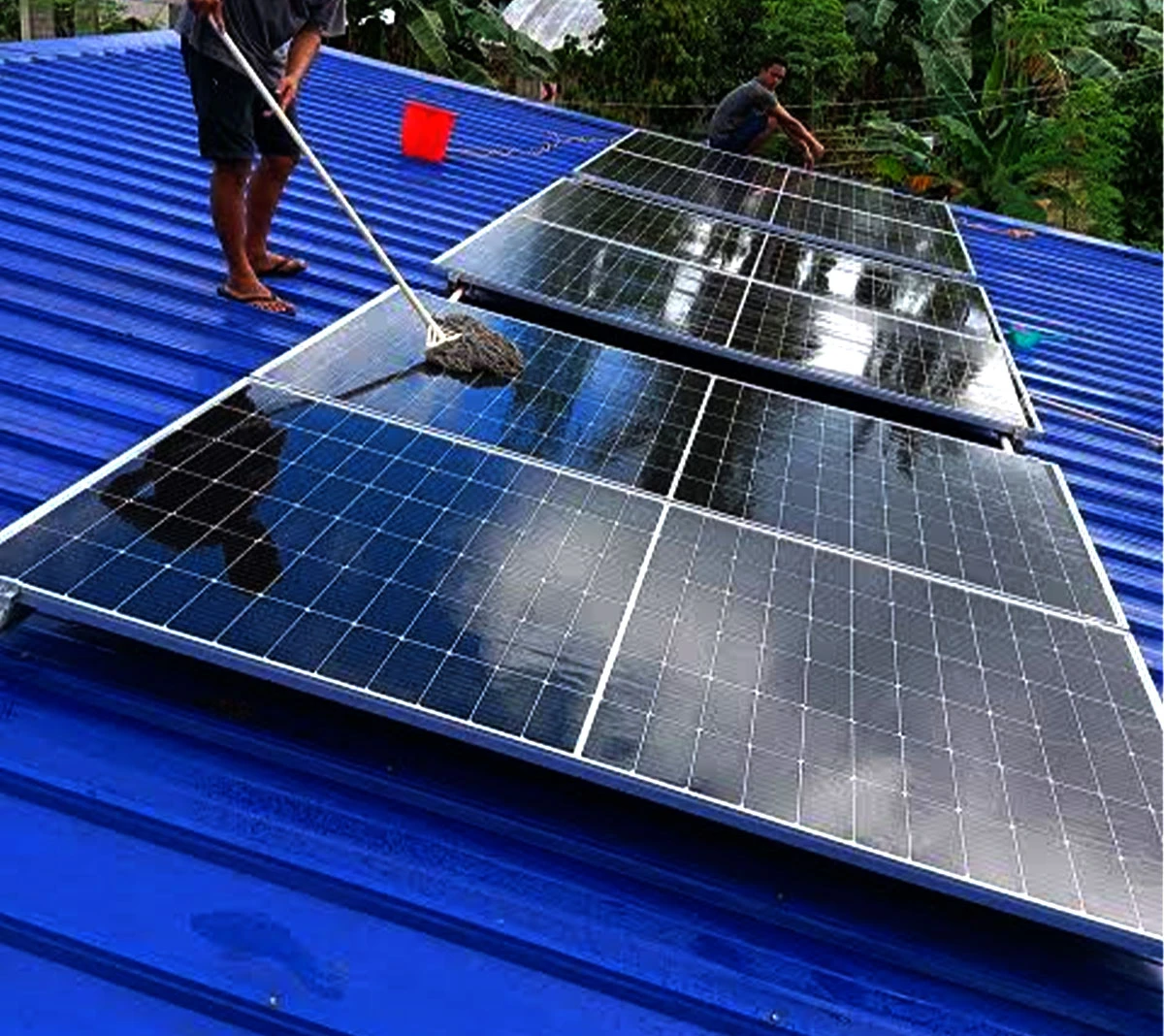
Certification Requirements: What You Need to Know Under the New Rules
On May 25, 2026, the Philippine Department of Trade and Industry (DTI) formally published a Draft Administrative Order proposing mandatory product certification for PV modules, inverters, battery energy storage systems (BESS), rapid shutdown devices, battery charge controllers, and PV cables. This marks the most significant regulatory upgrade the Philippine solar industry has seen to date. Key provisions include:
All covered products - whether locally manufactured or imported - must comply with the Philippine National Standards (PNS), enforced by the DTI's Bureau of Philippine Standards (BPS).
The new framework offers two certification pathways: the PS Licensing Scheme, for local manufacturers, and the Import Commodity Clearance (ICC) Certification Scheme, for importers.
Once the rules take effect, only products carrying both the PS Safety Mark and ICC certification will be permitted for sale, distribution, installation, or use in the Philippine market.
The certification system will also include laboratory testing, factory audits, product sampling, and post-market surveillance, and will require manufacturers and importers to implement product traceability, proper labeling, and formal complaint and recall procedures.
If a product is found non-compliant, the BPS will notify the manufacturer or importer, who then has 15 days from receipt of notice to complete a product recall.
The draft order was followed by a 60-day public comment period (through July 25, 2026), and the industry will be given a one-year transition period to come into full compliance once the rule is finalized.
DTI Trade Secretary Cristina A. Roque said the goal of the new rules is to prevent the Philippines from becoming a "dumping ground" for rejected equipment, and to give consumers confidence that the solar products they invest in are safe, reliable, and built to last.
What does this mean for buyers? Starting in the second half of 2026, installers, distributors, and project owners alike should proactively confirm - before signing any contract with a Chinese supplier - whether that supplier's products have obtained, or are in the process of obtaining, PS Safety Mark and ICC certification, and should retain complete certification documentation and test reports to manage future compliance risk.
Suppliers that already hold a robust international certification portfolio (IEC, CE, TÜV) and understand the Philippine certification process will be at a clear advantage once the new rules take effect.
Frequently Asked Questions
Q1: How much cheaper is it to buy solar panels directly from a Chinese factory compared to a local Philippine distributor?
A: Direct factory sourcing typically saves 15–30% compared to going through a local distributor, though the exact savings depend on order volume and the supplier's position in the distribution chain.
Q2: What's the minimum order quantity for a first-time buyer working with a Chinese supplier?
A: Most Tier-1 factories support LCL orders, and minimum order quantities (MOQs) vary by manufacturer and module type. It's best to confirm directly with the supplier - many also support small trial orders.
Q3: When will the Philippines' new PS Safety Mark certification requirement become mandatory?
A: As of this article's publication, the rule remains in its public comment period (through July 25, 2026). Once finalized, the industry will receive a one-year transition period. Buyers are advised to work with suppliers that already have relevant certifications in place.
Q4: Is the quality of Chinese solar modules reliable, or is there a risk of substandard products?
A: Leading Chinese manufacturers produce panels that meet world-class quality standards, but quality does vary across the broader market. The key is choosing suppliers with a full suite of international certifications, verifiable third-party test reports, and a proven export track record to the Philippines.
Given the explosive growth of the Philippine solar market, increasingly strict certification requirements, and buyers' three-way demand for competitive pricing, fast delivery, and reliable quality, Jingsun is committed to being the most trusted direct-sourcing partner for installers, EPC contractors, and distributors across the Philippines:
✅ One-stop export service - from product selection and production scheduling through to customs and logistics, with full transparency and traceability at every step, cutting out the middlemen and delivering true factory-direct pricing.
✅ A comprehensive international certification portfolio - products are backed by IEC, CE, TÜV and other leading international certifications, with ongoing alignment to the Philippines' evolving PS Safety Mark and ICC requirements, helping customers prepare for compliance ahead of time.
✅ Flexible products and delivery options - in-stock and custom production run side by side, with flexible FCL and LCL shipping to suit everything from small residential projects to large commercial and industrial installations.
✅ Modules engineered for Philippine conditions - optimized encapsulation and weather-resistant design for high-temperature, high-humidity environments, ensuring stable, long-term power generation.
✅ A transparent working process - third-party factory audits and pre-shipment inspections, staged payment options, and a straightforward onboarding process for customers working with us for the first time.
If you're sourcing solar modules for a project in the Philippines and looking for a stable, compliant, and price-competitive supplier, reach out to the Jingsun team for a customized quote and the latest delivery schedule.
Data source
Data in this article is sourced from pv magazine, Ember Climate, and public statements from the Philippine Department of Trade and Industry (DTI). It is provided for informational purposes only; please refer to your actual contract terms and the latest official regulations when making procurement decisions.