



How much does it actually cost to install residential solar panels in the Philippines?
A Note Before We Start
This article is a summary of firsthand accounts from an industry veteran with seven years of experience in solar sales and system integration in the Philippines. It is not a manufacturer's brochure, nor is it theory borrowed from other markets. The data in this article comes from actual installation projects completed by our team in Manila, Cebu, and Davao-real quotes, real electricity bill comparisons, real customer feedback, and records of our partnerships with solar panel suppliers established between 2025 and 2026.
If you are a homeowner in the Philippines and want to understand the actual cost of solar energy, the electricity savings, and when you can recoup your investment-then this article is worth 20 minutes of your time.
Why 2026 Is a Critical Window for Solar in the Philippines
Not every market, not every moment, is the right time to move. The Philippines right now is an exception.
Electricity Rates Keep Climbing
Meralco's residential rate hit ₱13.8161 per kWh in March 2026, up from ₱13.17 in February. For a household using 300 kWh a month, that's roughly ₱646 more per year - and the trend shows no sign of reversing. The Philippine grid runs heavily on imported coal and oil, and when Brent crude touched $119.50 per barrel in March 2026 amid Middle East tensions and Strait of Hormuz disruptions, that pressure fed directly into local electricity pricing.
Put simply: electricity in the Philippines isn't cheap, and the odds are strong it gets more expensive from here.
Panel Prices Have Dropped Significantly
The fully installed cost per watt in the Philippine solar market has fallen from ₱80–90/W in 2024 to ₱55–75/W in 2026 - a 20–30% drop in two years. That trend is still moving, but the rate of decline is narrowing.
"Wait for cheaper" is a trap. Every year you wait, you pay another year of rising electricity bills while the remaining cost savings from falling panel prices shrink. The math no longer favors delay.
The Policy Window Is Still Open
The Energy Regulatory Commission (ERC) currently enforces a Net Metering policy that lets residential users export excess generation back to the grid and offset their bills. It's a genuinely favorable arrangement for homeowners right now. As rooftop solar adoption accelerates, policy terms will eventually tighten - earlier adopters lock in the better deal.
What a Solar System Actually Costs in the Philippines
The first question everyone asks is: how much?
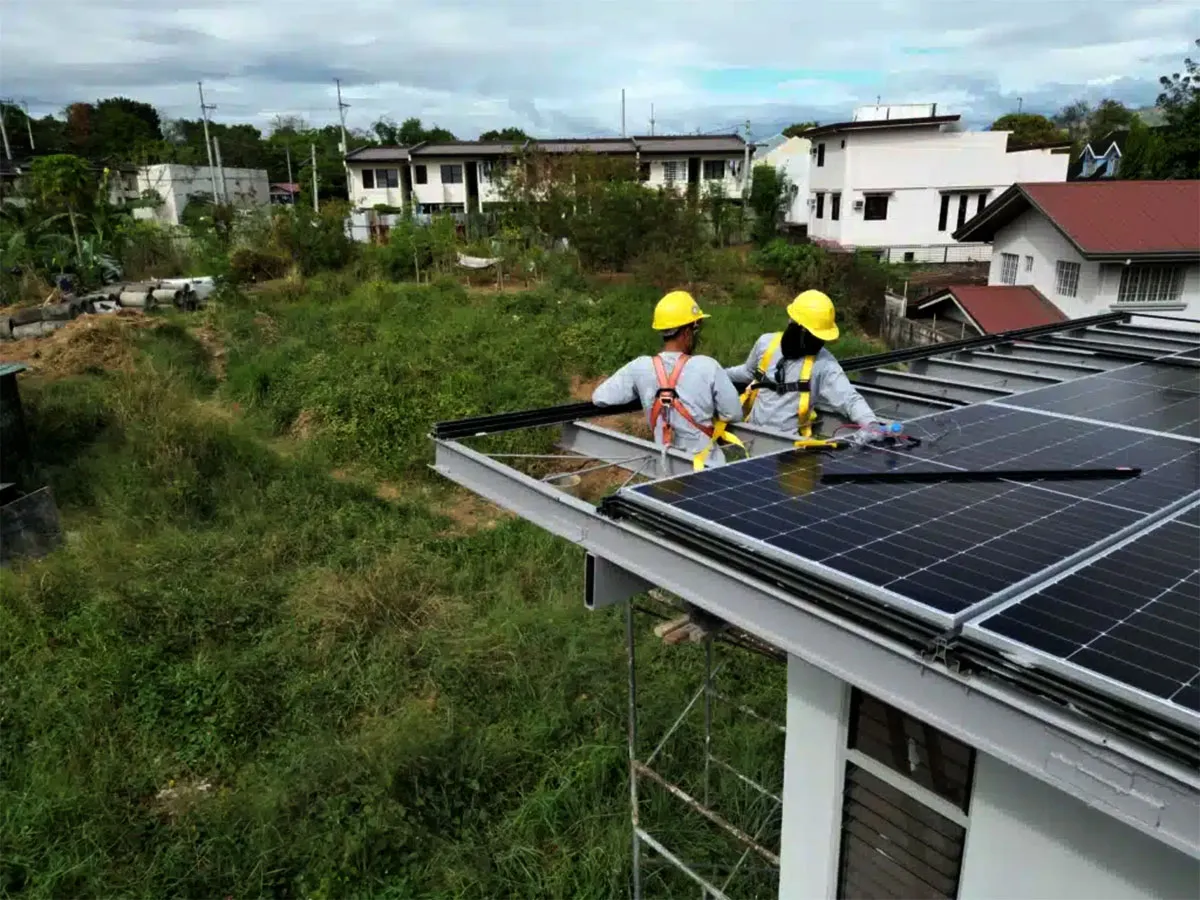
The answer depends on system size and configuration. Below is the pricing range we're actually quoting in 2026, all-in: panels, inverter, mounting structure, wiring, permit assistance, and commissioning.
|
System Type |
Capacity |
All-In Price Range |
Est. Monthly Generation |
|
On-Grid |
3 kWp |
₱165,000–₱225,000 |
330–450 kWh |
|
On-Grid |
5 kWp |
₱275,000–₱375,000 |
550–650 kWh |
|
Hybrid (battery-ready) |
5 kWp |
₱430,000–₱680,000 |
550–650 kWh |
|
On-Grid |
10 kWp |
₱550,000–₱750,000 |
1,100–1,300 kWh |
Note: Metro Manila (NCR) installations run 10–15% higher than other regions due to labor costs.
The ₱55,000–₱75,000/kW all-in price cited by most Philippine installers covers everything: panels, inverter, mounting rails, AC and DC wiring, permit assistance, and system commissioning. It's a genuine turnkey number, not a teaser.
What About Individual Panels?
Standard 200W–300W panels run around ₱5,000–₱10,000 per unit. A complete home system ranges from ₱100,000 to ₱500,000 depending on energy needs. High-power modules at the 800W level are typically sourced through distributors or directly from Chinese manufacturers, and the per-watt economics are increasingly competitive.
Three Real Installations - Different Homes, Different Paths
Case 1: A Family of Three in Quezon City
Situation: Monthly electricity bill averaging ₱4,800. Main loads: two split-type air conditioners, rice cooker, refrigerator, washing machine. Meralco customer consuming around 360 kWh per month.
System: 4 kWp on-grid setup using eight 500W monocrystalline panels, Growatt inverter, installed on a pitched roof.
Results:
Total system cost: ₱210,000 (VAT and installation included)
Monthly electricity savings: approximately ₱3,600
Net metering credit offset: approximately ₱400/month
Payback period: approximately 4.8 years
Over the 25-year system life: cumulative savings of approximately ₱960,000
Client quote: "When the first bill came in at ₱1,100, I actually thought Meralco had made a mistake."
Case 2: A Restaurant and Apartment Building in Cebu City
Situation: Commercial electricity use, monthly bill around ₱32,000. Main loads: commercial refrigeration, lighting, multiple air conditioning units.
System: 15 kWp on-grid installation using high-power modules including Jingsun 800W HJT panels, Sungrow three-phase inverter, approximately 60 square meters of usable roof space.
Why Jingsun 800W panels were chosen: The roof area was the constraint. Getting to 15 kWp in 60 sqm required high-efficiency, high-power modules - there was no other way to hit the target capacity. Each 800W panel replaced what would have been 1.5–2 units of 450W panels, reducing racking points, cabling runs, and long-term maintenance complexity.
Results:
Total system cost: approximately ₱850,000
Monthly electricity savings: approximately ₱21,000
Payback period: approximately 3.4 years (commercial daytime usage means a high self-consumption rate during peak generation hours)
Case 3: An Off-Grid Household in Davao Province
Situation: No grid connection. Relying entirely on a diesel generator, with monthly fuel costs around ₱6,500.
System: 3 kWp off-grid setup with a 200Ah lithium battery bank, using two Jingsun 800W panels operating at derated output within inverter limits.
Special considerations: The location is in a typhoon-prone area. Mounting design had to meet 150 km/h wind load requirements. The larger-format 800W panels required reinforced racking, which was engineered and load-tested before installation.
Results:
System cost: ₱195,000
Diesel fuel costs: eliminated entirely, saving approximately ₱78,000 per year
Payback period: approximately 2.5 years
Quality-of-life gains: no more generator noise or exhaust fumes; full appliance use after dark
Why the Jingsun 800W HJT Panel Deserves Serious Consideration
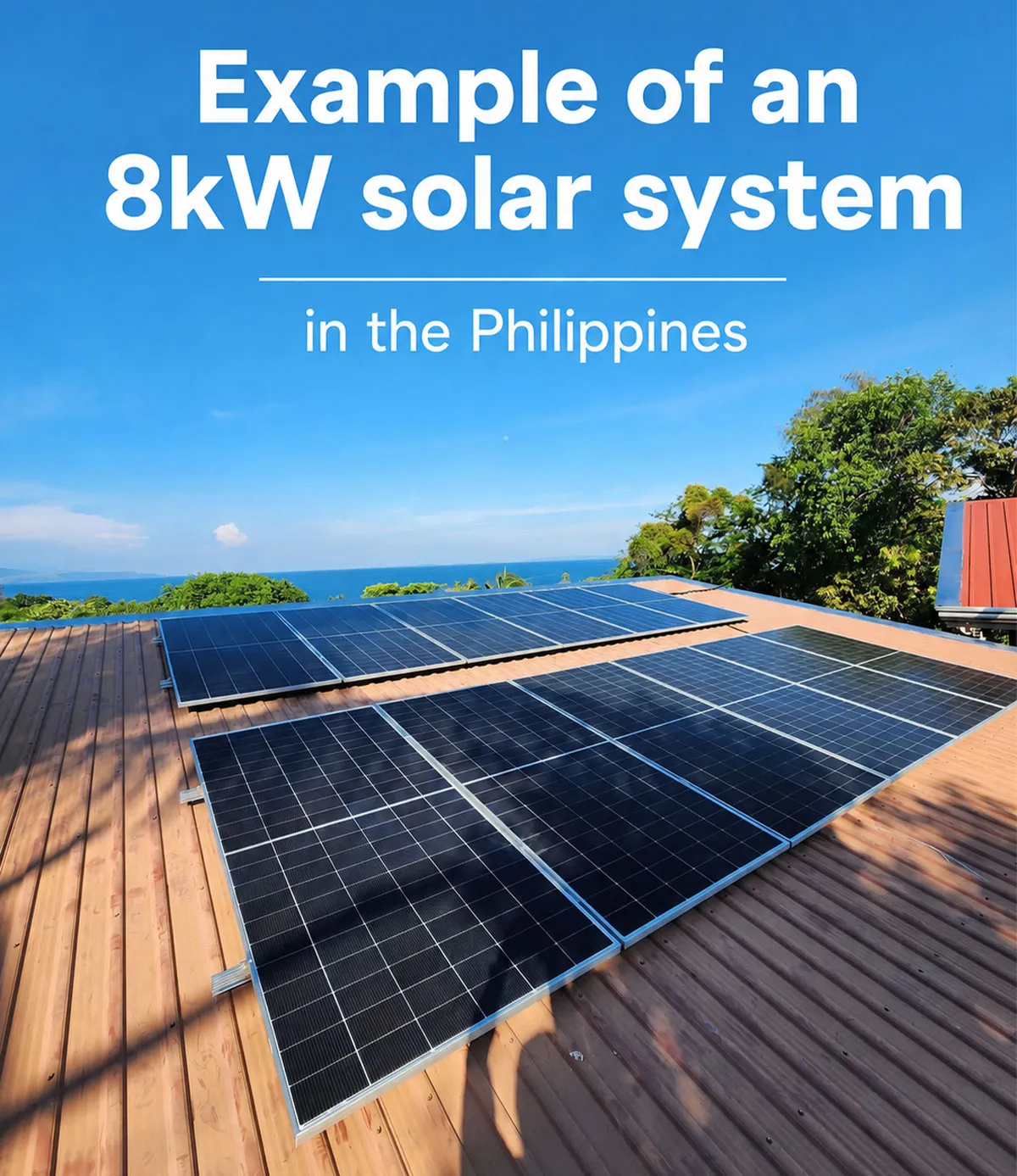
High-power modules are the fastest-moving segment of the Philippine solar market right now. Two years ago, 400–450W was the mainstream standard for distributed installations. Today, 600W-and-above products are entering the residential and light commercial market in volume, and the technology gap between product tiers is meaningful.
Jingsun was founded in 2010 and has been focused on solar energy products for over a decade. To date, the company has delivered more than 5 GW of photovoltaic modules and over one million complete systems, with exports reaching more than 100 countries including the United States, Germany, Brazil, the Middle East, and across Southeast Asia.
The Jingsun 800W panel uses HJT (Heterojunction Technology) bifacial double-glass construction with 18BB silver-coated copper busbars. The core model is JAM132D 770-800N, covering a power range of 770W–800W. It carries ISO, CE, and TUV certifications and comes with a 25-year product warranty.
Key technical figures:
Peak power: 800W
Module efficiency: 24.39%
Cell technology: 210mm N-type bifacial HJT half-cut cells
Bifaciality: 95%, meaning the rear surface meaningfully contributes to generation by capturing reflected and diffuse light
Annual power degradation: below 0.3%, among the lowest in the industry
Degradation resistance: strong resistance to LeTID, PID, and UV-induced degradation
Jingsun backs this panel with a 30-year linear power warranty guaranteeing at least 84.8% power retention at year 30, plus a 15-year product warranty. Global service centers provide technical support, module replacement, and on-site assistance.
HJT vs. TOPCon: Which Technology Fits the Philippine Climate Better?
This is the technical question I get most often from dealers and end customers. The short answer:
On front-side power output, Jingsun's HJT panels outperform comparable TOPCon modules by approximately 4.1%, due to superior electron mobility and a lower temperature coefficient. HJT's boron-free design also eliminates the B0-LiD (light-induced degradation) risk that affects some silicon-based technologies, while TOPCon panels are more susceptible to LeTID and high-temperature thermal stress.
In the Philippines, this matters in practice. Rooftop surface temperatures in Metro Manila regularly exceed 60°C during the dry season. A lower temperature coefficient means less generation loss when it's hot - and that difference shows up directly in your monthly bill, not just on a spec sheet.
In a comparative assessment of suppliers serving the Philippine market, Jingsun stands out for customization flexibility and efficiency, particularly because its N-type HJT technology maintains higher output under partial shading and elevated temperatures - two conditions that Philippine installations face consistently.
When Does It Make Sense to Choose the Jingsun 800W?
Not every project needs 800W panels. Based on our project experience, these are the scenarios where they make the most sense:
Urban rooftops with limited area: The same installed capacity requires 30–40% fewer panels, which means simpler racking, fewer penetration points, and lower structural load
Commercial rooftop projects: Fewer modules and connections means lower long-term maintenance overhead
Clients who need maximum output from a constrained roof: The bifacial design captures diffuse and reflected light effectively, especially valuable on light-colored rooftops or locations with ground reflection
How to Calculate Your Payback Period - A Simple Method
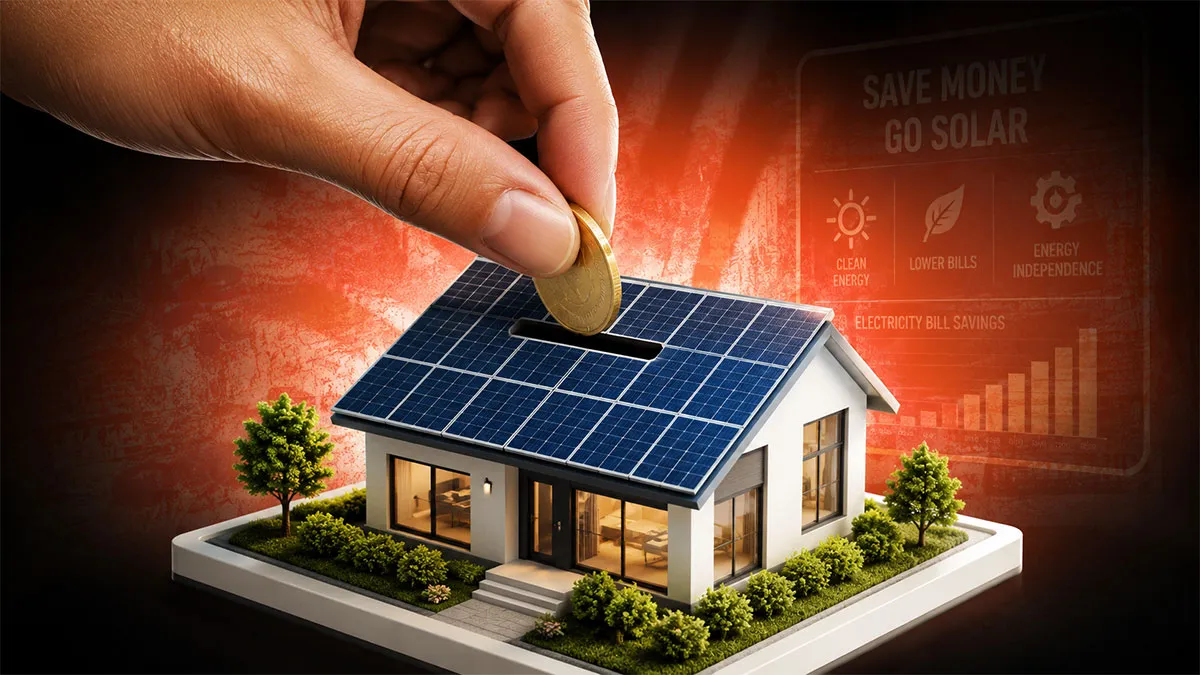
The formula gets complicated when people try to account for every variable. The core logic is simple:
Payback period (years) = Total system cost ÷ Annual electricity savings
Take a household paying ₱8,000 per month on electricity. With Meralco residential rates at ₱11.80–₱13.20 per kWh in 2026, a 5 kWp system generating 550–650 kWh per month produces roughly ₱6,600–₱7,800 worth of electricity every month.
Working through the numbers:
System cost: ₱300,000 (5 kWp on-grid, fully installed)
Monthly savings: approximately ₱7,000
Annual savings: ₱84,000
Simple payback period: approximately 3.6 years
Net benefit over 25-year system life: ₱84,000 × 25 − ₱300,000 ≈ ₱1,800,000
With electricity rates continuing to rise, Philippine residential solar users are seeing payback periods ranging from 4–7 years and monthly savings commonly running ₱5,000–₱12,000 or more. A household spending ₱8,000 per month on electricity today can realistically bring that down to well under ₱3,000.
What You Need to Know Before You Install
1. Don't Skip the Roof Assessment
Typhoons are the most significant physical risk for Philippine solar projects. Mounting systems must meet local structural codes. For installations in the Visayas and Mindanao, specifically ask your installer for a wind load calculation document. If they can't provide one, find someone who can.
2. File for Net Metering Early
Meralco and other distribution utilities manage Net Metering applications by quota, and in some areas there's a waiting list. Talk to your installer about the application timeline before the system goes in - not after.
3. Panel Maintenance Isn't Optional
Clean your panels every three to four months. Dust and bird droppings can cut output by 10–15%, and during the Philippine dry season when dust from unpaved roads is heavy, you may need to clean more frequently. It's a small time investment with a direct return on generation.
4. Hybrid or Pure On-Grid?
If your area experiences frequent outages - parts of Mindanao, island provinces, some rural areas in Visayas - a hybrid system with battery storage is worth the premium. If your grid is stable, like most of Metro Manila's main residential areas, a pure on-grid system pays back faster. Don't pay for storage you don't need.
Quick Answers to Common Questions
Q: The Philippines has a rainy season. Does solar still make sense?
Yes. The Philippines averages five to six peak sun hours per day nationally, making it one of the strongest solar markets in Southeast Asia. Even during the rainy season, diffuse light generation typically runs at 50–70% of normal system output - enough to cover a meaningful share of household consumption.
Q: Imported panels or locally assembled?
There's no large-scale panel manufacturing in the Philippines. Virtually everything sold here originates in China, South Korea, or the United States. Focus on brands with legitimate certifications (CE, TUV, IEC), and pay close attention to module efficiency, degradation warranties, and the manufacturer's actual service capacity in-country.
Q: Can I finance the installation?
Yes. Most installers offer terms with 20–30% down payment. Interest rates through installer financing run around 10–15%. Some banks are beginning to offer green loan products at lower rates - worth asking about if you're working with a larger system budget.
Q: Are 800W large-format panels suitable for a home rooftop?
They work on residential rooftops, particularly where space is the constraint. The high power density means fewer mounting points for the same total system capacity, and the half-cut cell design reduces losses from partial shading - a common issue on rooftops with nearby structures or trees. The main consideration is that the panels are physically larger, so roof structure and available unshaded area need to be assessed before specifying them.
Closing Thoughts
The Philippine solar market in 2026 has entered what I'd call the "show me the math" era. Adoption is no longer driven by environmental sentiment or government incentives - it's driven by the simple, verifiable fact that electricity costs less when you generate it yourself. Every panel choice and every system design ultimately comes back to one question: when does my money come back, and how much?
For most Filipino homeowners, a 3–5 kWp on-grid system is the clearest starting point. For commercial users or anyone with a constrained rooftop and real energy demand, high-efficiency panels like the Jingsun 800W HJT are becoming the first choice on more and more projects - not because they're the most expensive option, but because they deliver what other panels can't in limited space.
Solar is an investment that works the moment it's turned on. Get the numbers right first, then make the call.
Data sources:
Meralco March 2026 Rate Advisory; ERC Philippines Net Metering Rules 2026; Philippine installer market quotes, May 2026; Jingsun product technical specifications; Department of Energy Philippines.