


The European PV Market's Crossroads in 2026
In March 2026, the EU's Industrial Accelerator Act was officially published, imposing restrictions on Chinese PV projects and triggering a chain reaction. Italian auction costs surged by 17%, European installed capacity declined for the first time in a decade, and a massive blackout in the Iberian Peninsula sounded the alarm-how to balance industry protection and energy transition?
Keywords: European energy transition, PV import restrictions, Industrial Accelerator Act, Chinese PV modules, domestic content requirements, net-zero target, grid stability, energy storage deployment rate

2025 will be a pivotal year for the European solar industry, fraught with contradictions.
On one hand, the EU announced it had achieved its 400GW photovoltaic (PV) installation target ahead of schedule, bringing the total installed capacity to 406GW. On the other hand, a dangerous signal is emerging-for the first time since 2016, Europe's annual solar installations will decline year-on-year, from 65.6GW in 2024 to 65.1GW in 2025. More worryingly, this downward trend is expected to continue until 2027, making the 750GW target for 2030 increasingly distant.
At this critical juncture, on March 4, 2026, the European Commission officially published the Industrial Accelerator Act (IAA), proposing to implement a "Made in the EU First" policy in public procurement and financially supported projects through strict local content requirements. China is explicitly excluded from the list of "trusted partners."
As the "accelerator" of energy transition encounters the "brakes" of industrial protectionism, Europe stands at a crossroads where it must make a crucial decision.
Market Shift: From Expansion to Structural Adjustment
1. Three Driving Forces Behind the First Decline in Installed Capacity
The contraction of the European PV market in 2025 is no accident. According to SolarPower Europe data, the residential PV market has shrunk dramatically, falling from 28% of new installations in 2023 to 14% in 2025. This change is due to a combination of factors:
First, subsidy reduction. In the post-energy crisis era, countries have been cutting back on residential rooftop support programs. The withdrawal of support policies in countries like Italy has directly led to a sharp contraction in their residential markets.
Second, high financing costs. Higher borrowing costs and tighter credit conditions are suppressing project development.
Third, grid absorption bottlenecks. The massive blackout on the Iberian Peninsula on April 28, 2025, served as a wake-up call-due to renewable energy penetration exceeding 40% and insufficient grid inertia, Spain and Portugal experienced an instantaneous loss of approximately 15GW of power, accounting for 60% of their total load.
2. The Cycle Shift from "Rapid Installation" to "Inventory Reduction"
SMM data shows that the European photovoltaic market has experienced a complete cycle of "inventory accumulation-destocking-rebalancing":
2024: Continuous inventory accumulation: Inventory climbed from approximately 25GW at the beginning of the year to a historical peak of over 50GW in November.
First half of 2025: Deep destocking: By June, inventory had fallen to an annual low of approximately 30GW, with distributors significantly reducing new purchases.
Second half of 2025: Fluctuation and adjustment: Inventory remained around 33GW, and the market entered a just-in-time purchasing mode.
This means that the "extensive" growth model relying solely on module exports is no longer sustainable in Europe.
Policy Shift: The Industrial Accelerator Act Officially Takes Effect
1. Core Provisions of the Act
On March 4, 2026, the Industrial Accelerator Act, after numerous delays, was finally published. Its core contents include:
Public Procurement Thresholds: Mandatory "Made in the EU" requirements are imposed on strategic industries such as steel, cement, aluminum, and automobiles, and can be extended to energy-intensive industries such as chemicals.
Investment Access Conditions: For major projects with a single investment exceeding €100 million in EU strategic industries, if a single third country accounts for more than 40% of global production capacity, technology and knowledge transfer must be implemented, local production requirements must be met, and the proportion of EU local employees must be no less than 50%. This provision mainly targets China-in the four major areas of batteries, electric vehicles, photovoltaics, and key raw materials, China's global production capacity accounts for more than 40% in each.
"Trusted Partner" Exclusivity System: "Equivalent to EU Origin" treatment is only granted to countries that have signed free trade agreements with the EU or are parties to the Government Procurement Agreement; China is not on this list.
2. Internal Disagreements and External Controversies
After the bill's publication, opposition continued to grow.
Within the EU, France explicitly supports the bill, but most member states, including Germany, Sweden, the Czech Republic, Estonia, Finland, and the Netherlands, have raised concerns. German Chancellor Merz publicly criticized the minimum percentage threshold for "Made in the EU," emphasizing that preferential treatment for domestically produced goods should only be used as a "last resort." The German Association of the Automotive Industry warned that the bill forcibly severs the global supply chain, deviating from the core direction of reducing burdens and increasing efficiency. Ola Källenius, Chairman of the Board of Management of Mercedes-Benz, bluntly stated: "Protectionist measures are tantamount to 'slicing through the industrial ecosystem with a chainsaw,' ultimately triggering a chain reaction of rising prices, shrinking markets, and trade retaliation."
Internationally, the UK, Japan, and Canada have all expressed serious dissatisfaction. China's Ministry of Commerce stated on the 6th that "protectionism cannot enhance competitiveness; openness and cooperation are the right path to development," and that the relevant clauses are suspected of violating the most-favored-nation (MFN) principle.
It is noteworthy that even within the European Commission, there are divisions: Ségolène, responsible for industrial affairs, advocates strict rules, while Šefčovič, responsible for trade, favors a more open approach. The bill still needs to be finalized through consultations between the European Parliament and EU member states, and its content may still be subject to significant adjustments.
Italy Warns: The High Cost of Protectionism
Italy is becoming a "leading indicator" for observing the consequences of import restrictions.
1. The "Shock" of the Auction Market
In photovoltaic auctions under the FerX incentive mechanism, projects explicitly prohibiting the use of Chinese modules, cells, and inverters saw a sharp drop of over 85% in winning bids compared to the previous round. The winning bid prices for surviving projects increased by 17.6%.
ING analysts noted in their "2026 Energy Outlook" report: "In December 2025, Italy became the first EU country to ban Chinese modules, cells, and inverters from participating in photovoltaic auctions. It is expected that in 2026, other member states will introduce similar rules-either completely banning Chinese modules or prioritizing the purchase of EU-made modules. While these measures support domestic production, the benefits will take time to materialize."

2. Domestic Production Capacity is Insufficient
The core issue lies in the supply-demand imbalance. Currently, Europe's domestic photovoltaic production capacity is only about 10GW/year, while the 2030 installation target of 700GW implies an average annual demand of over 70GW. Even the most optimistic EU plan only proposes achieving 30GW of full-chain capacity by 2030.
European-made modules are 30-50% more expensive than imported products. ING warns: "Abandoning cheap products from China in the short term-China accounts for 98% of the EU's solar panel imports-could drive up costs, disrupt supplier cooperation, and slow down installation."
Transformation Challenges: Grid Stability and the Rise of Energy Storage
1. Curtailment Erodes Yields
Data from the Greek market reveals the challenges facing pure photovoltaic (PV) power plants. According to the Greek Photovoltaic Producers Association, curtailment reached 1.85 TWh in 2025, a tenfold increase year-on-year, mainly concentrated during the peak power generation period from 9:00 AM to 4:00 PM. This non-technical power loss directly lowers the internal rate of return (IRR) of projects, and some existing projects can no longer cover financing costs, leading financial institutions to tighten lending to pure PV projects.
2. Energy Storage: From Optional to Essential
The European electricity market faces a mismatch between peak PV power generation and peak electricity demand, resulting in midday power surplus and frequent negative electricity prices. Driven by market pricing mechanisms, demand for energy storage is rising rapidly.
According to the International Energy Agency, new energy storage capacity in Europe will approach 30 GWh in 2025, a year-on-year increase of 39%; among which, large-scale energy storage capacity in Germany will increase by 180%. EUPD Research data shows that battery energy storage capacity in Europe will exceed 29 GWh in 2025, a year-on-year increase of over 36%.
Market focus is shifting from simple photovoltaic modules to system-level products that integrate photovoltaics, energy storage, and virtual power plant interfaces. Assets with flexible adjustment capabilities and the ability to respond to grid dispatch instructions will remain competitive in the electricity spot market, while pure photovoltaic projects lacking adjustment capabilities face the risk of being eliminated by the market.
The Balance: Finding a Third Way
Faced with the dilemma of "protecting manufacturing" versus "protecting transformation," the EU needs a more phased policy design.
First, acknowledge the time dimension of the capacity gap. During the transition period of 2025-2027, the mandatory localization requirements for core components should be appropriately relaxed. After local production capacity is initially established after 2028, the proportion of local components should be gradually increased. Forcibly filling a 70GW demand gap with 10GW of local production capacity will only repeat Italy's mistakes.
Second, shift support methods from trade barriers to technical barriers. Increase R&D subsidies for next-generation battery technologies (heterojunction, perovskite tandem), establishing a competitive advantage at the forefront of technology rather than relying on market closures.
Third, supply chain diversification does not equate to "de-Sinicization." Introducing diverse suppliers from India and Southeast Asia will create a multi-pronged competitive landscape-ensuring cost competitiveness while mitigating geopolitical risks.
Fourth, energy storage infrastructure should be a policy priority. Instead of imposing numerous restrictions on component sourcing, it's better to promote the development of "photovoltaic + energy storage" system integration capabilities to address the real bottleneck of grid absorption.
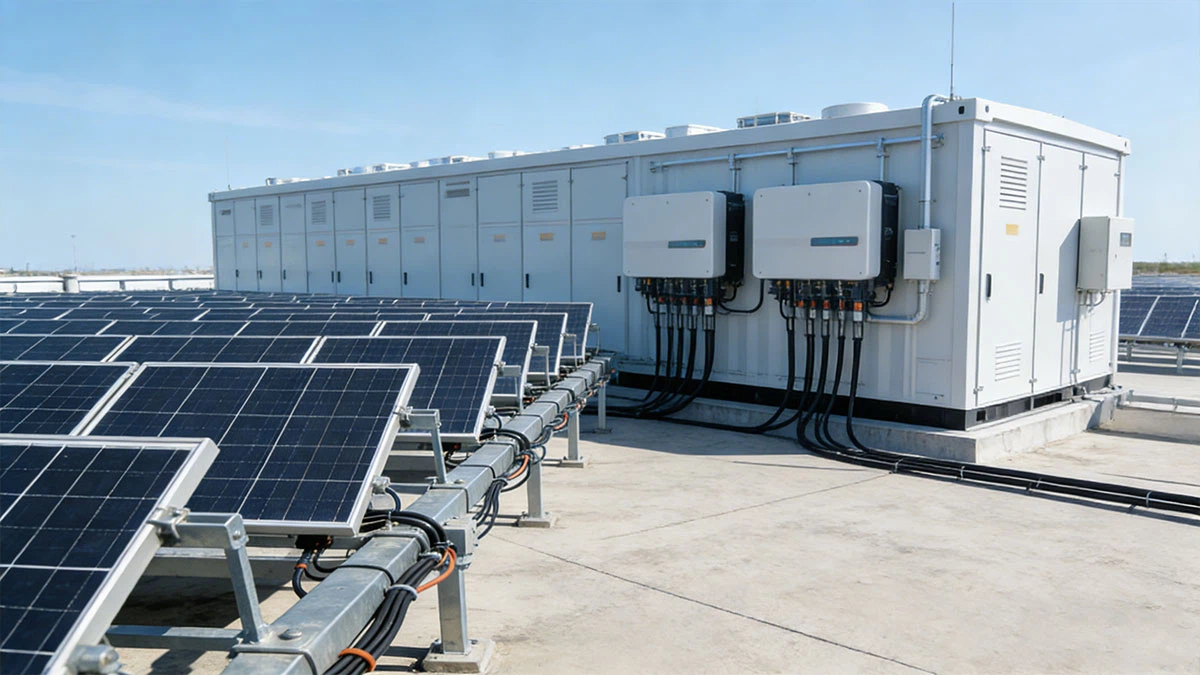
The Industrial Accelerator Act is still under legislative review, leaving room for policy optimization. However, the window of opportunity for Europe is narrowing-installed capacity is expected to decline for the first time in 2025, the 2030 target is becoming increasingly distant, grid stability is sounding alarm bells, and the transition to energy storage is imminent.
If the act ultimately becomes a "domestic protection umbrella" erecting high walls, it will not shelter a weak manufacturing sector, but rather soaring energy costs and a gradually slowing pace of transformation. Italy's 17% cost increase has already served as a warning.
True industrial protection forges competitiveness through openness; true energy transformation seeks win-win outcomes through pragmatic cooperation. At 2026, a crucial turning point for the global photovoltaic market, shifting from scale expansion to quality and efficiency, Europe needs to find a balance between industrial ambition and the realities of transformation, ensuring that solar energy truly becomes an "engine" rather than a "bottleneck."
Data Sources: SMM, SolarPower Europe, EUPD Research, ING Energy Outlook 2026, International Energy Agency, PV Magazine, Legal Daily