


Exporting Solar Products to Brazil: Tariffs, Certifications and Market Requirements (2026 Guide)
Brazil has become one of the most attractive solar markets in the world. Over the past few years, installations have grown rapidly as electricity prices increase and distributed generation becomes more popular among homeowners, farms, and commercial businesses.
For solar manufacturers and exporters, the opportunity is clear. But entering the Brazilian market is not just about pricing or logistics. Companies must also comply with local certification systems, import rules, and grid standards.
If you are planning to export solar panels, inverters, batteries, or complete PV systems to Brazil, understanding these requirements is essential. The following guide explains the key regulations and certifications you need to know in 2026.

Brazil's Solar Market and Import Environment
Brazil is currently one of the largest solar markets outside of Asia. Distributed generation systems-especially rooftop installations-account for the majority of new capacity.
Several factors drive the market:
Rising electricity prices in many regions
Strong adoption of rooftop solar by farms and small businesses
Government regulations encouraging distributed generation
Increasing demand for renewable energy among companies
Despite strong demand, Brazil maintains a structured import system and product certification framework to ensure equipment quality and safety.
Import Tariffs for Solar Equipment in Brazil
One of the first issues exporters encounter is Brazil's complex tax structure.
Solar products are subject to multiple import taxes. The most important policy affects photovoltaic modules.
Solar Panel Tariff Policy
Brazil uses a tariff-rate quota system for photovoltaic modules:
Import Category Tariff
Quota allocation 0%
Outside quota 25%
Solar panels are classified under HS Code 8541.43.
This approach allows a certain volume of imports to enter duty-free, while additional imports are taxed to support local manufacturing initiatives.
Additional Taxes on Imported Solar Equipment
Beyond the import tariff, other taxes can apply depending on the product and state:
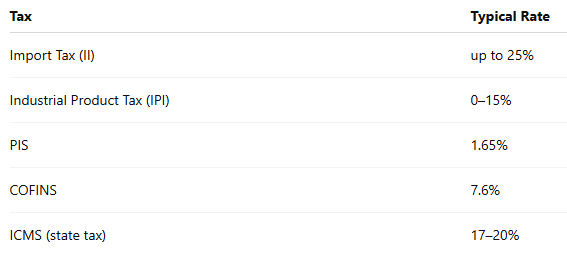
Because of these combined taxes, the final landed cost of solar equipment in Brazil may increase 40–60% compared to the original export price.
Import Registration System
All imports must be processed through the Brazilian foreign trade platform:
SISCOMEX
Brazilian importers must register shipments through this system and provide the required customs documentation, including:
Commercial invoice
Packing list
Bill of lading
Product certification documentation
In most cases, foreign manufacturers work with a local importer or distributor who manages the customs process.
Key Certification Authorities in Brazil
Solar equipment certification in Brazil mainly involves two organizations.
INMETRO
INMETRO is responsible for product safety and quality certification. Many electrical and renewable energy products must obtain INMETRO approval before entering the market.
The certification usually includes:
Laboratory testing
Factory inspection
Compliance labeling
ANEEL
ANEEL regulates Brazil's electricity sector and establishes rules for grid connection and distributed generation.
While INMETRO certifies the equipment itself, ANEEL regulates how systems interact with the power grid.
Certification Requirements for Solar Panels
Photovoltaic modules must obtain INMETRO certification before they can be legally sold or installed in Brazil.
The certification process generally follows international standards such as:
IEC 61215
IEC 61730
Manufacturers must submit modules for testing and undergo factory inspections before receiving certification.
Without valid certification, solar panels cannot be cleared by customs or used in Brazilian installations.
Certification Requirements for Solar Inverters
Solar inverters must meet both safety requirements and grid connection standards.
In addition to INMETRO certification, inverters must comply with Brazilian electrical standards including:
ABNT NBR 16149
ABNT NBR 16150
IEC 62116
These standards ensure the inverter can safely interact with the utility grid by providing protection against abnormal voltage, frequency variations, and islanding conditions.
Certification for Energy Storage Batteries
As solar-plus-storage systems become more common, battery safety requirements are increasingly important.
Lithium batteries typically require certification based on:
IEC 62619
For international shipping, batteries must also comply with:
UN38.3
Manufacturers must provide additional documentation such as:
Safety data sheets (SDS / MSDS)
Transport test reports
Requirements for Complete PV Systems
Some exporters supply PV kits or complete solar systems rather than individual components.
A typical PV kit may include:
Solar modules
Inverters
Mounting systems
Electrical cables
Optional battery storage
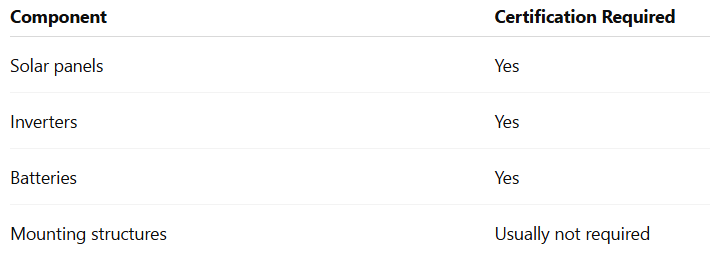
In most cases, the full system does not require a separate certification. Instead, the key components must already hold valid INMETRO certification.
Product Labeling Requirements
All solar products sold in Brazil must include labeling in Portuguese.
The label generally includes:
Manufacturer name
Model number
Electrical ratings
Serial number
INMETRO certification mark
Incorrect or missing labels can lead to customs delays or product rejection.
Grid Connection Regulations
Solar installations must follow regulations issued by ANEEL.
Important distributed generation rules include:
REN 482/2012
REN 687/2015
These policies define how solar systems connect to the grid and how surplus electricity can be credited under Brazil's net metering framework.
Practical Market Entry Strategies
For international manufacturers, entering the Brazilian solar market often involves working with local partners.
Common strategies include:
Partnering with distributors
Local distributors handle certification, import procedures, and sales networks.
Selling complete solar kits
Offering integrated PV systems can increase margins compared to selling modules alone.
Establishing local inventory
Local warehouses help reduce shipping times and improve service for installers.
Exploring local assembly
Some manufacturers assemble modules locally to mitigate import tariffs.
Frequently Asked Questions
Do solar panels require certification in Brazil?
Yes. Solar panels must obtain certification from INMETRO before they can be imported, sold, or installed.
What is the import tariff for solar panels in Brazil?
Brazil applies a tariff-rate quota system. Imports within the quota may enter duty-free, while imports exceeding the quota are subject to a 25% tariff.
Can foreign companies sell solar equipment directly in Brazil?
Most foreign manufacturers work with a Brazilian importer or distributor who handles customs clearance through SISCOMEX.
Do complete solar systems need certification?
Usually not. However, the major components-such as solar panels, inverters, and batteries-must already have the required certifications.
Brazil remains one of the most promising solar markets globally, especially for distributed generation projects. At the same time, entering the market requires careful attention to certification procedures, import tariffs, and grid regulations.