


2026 Europe & America BC Solar Module Surge: Orders Land, Tech Leadership & the New Global High-Efficiency PV Landscape
In the wave of global photovoltaic (PV) industry upgrading towards high efficiency and aesthetics, Back Contact (BC) solar modules have continued to gain momentum in the European and American markets, relying on their core advantages of gridless design and ultra-high conversion efficiency. As of April 2026, BC modules have rapidly penetrated from residential distributed scenarios to large-scale ground-mounted power stations, becoming the core engine for the growth of the European and American PV markets. This article will comprehensively interpret the latest development trends of BC solar modules in Europe and America, combining the latest order landings, price trends, technological iterations, and market competition patterns, to help industry partners seize market opportunities.
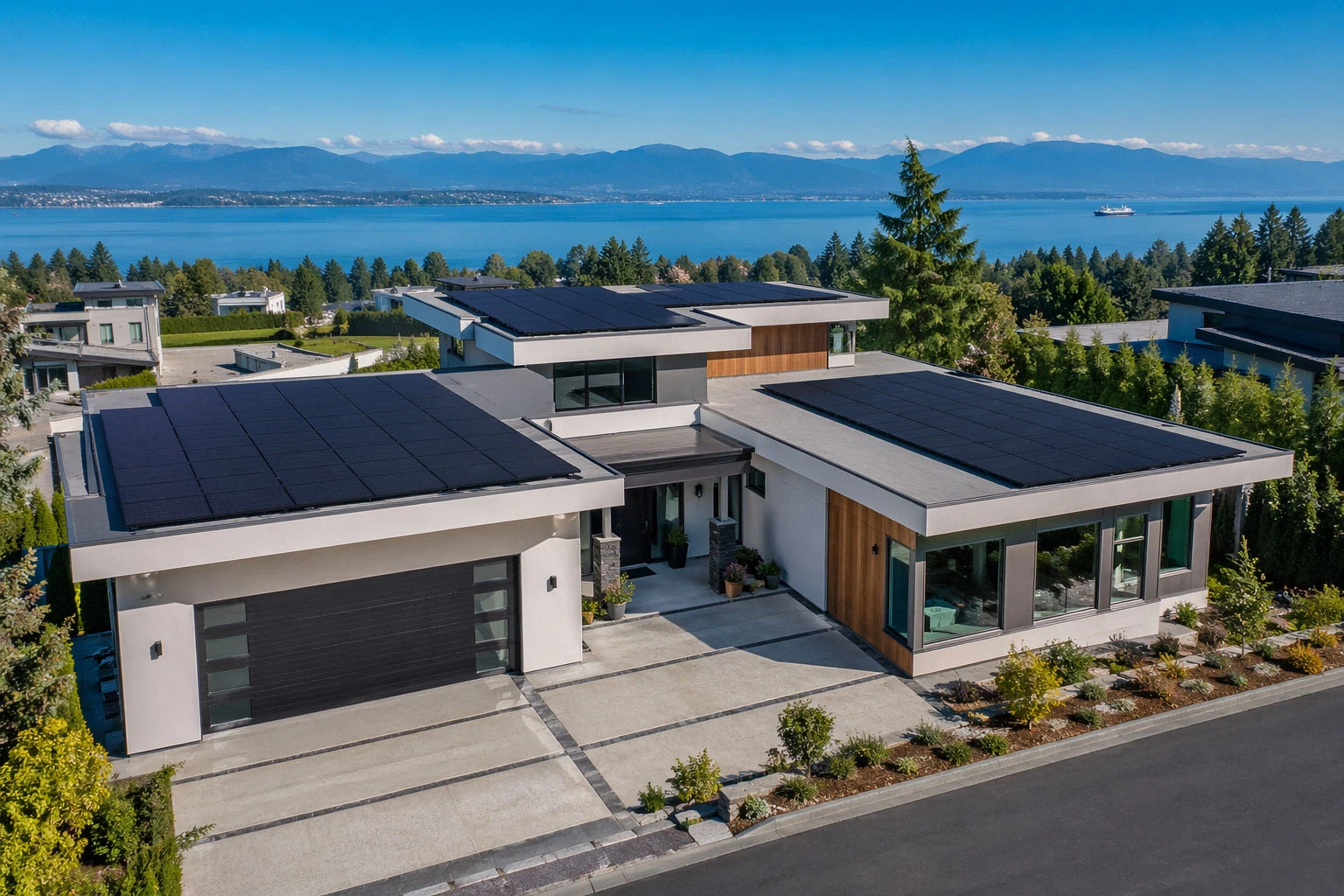
I. European Market: The Core Battlefield for BC Modules with Continuous Large-Scale Order Landings
As one of the core global PV markets, Europe has a strong demand for high-efficiency, aesthetic, and adaptable solar modules. Currently, it has become the region with the highest penetration rate and the most significant premium for BC modules in the world. Many leading enterprises have increased their layout, and large-value orders have been intensively landed.
1. Longi Green Energy: Sustained Leadership with Core Projects Landed in Multiple European Countries
As a leader in BC technology, Longi Green Energy has won multiple heavyweight orders in the European market with its Hi-MO 9 series HPBC modules, further consolidating its market position. In early 2026, Longi collaborated with Solarpro to supply all Hi-MO 9 modules for the 450MW photovoltaic power station in Hungary. This project has become the largest BC photovoltaic power station in Europe to date, with an annual power generation capacity of 470GWh after completion, which will effectively support Hungary's energy transition.
In addition, in January 2026, Longi signed a 300MW framework agreement with Western European distributor BM Energy to supply HPBC 2.0 modules, focusing on core European PV markets such as Germany; the 282MW photovoltaic project in Romania signed in September 2025 will be officially put into operation in 2026. As the largest solar energy project in Romania, this project will adopt more than 430,000 Hi-MO 9 modules with an efficiency of 24.8%; at the same time, Longi also collaborated with Chiron Energy to supply Hi-MO 9 modules for large-scale ground-mounted power stations in Italy from 2026 to 2027, continuously expanding its layout in the European market.
2. Aiko Solar: Breaking Scene Limitations with a Breakthrough in Large-Scale Ground-Mounted Power Station Orders
Aiko Solar has achieved a major breakthrough in the European market with the core advantages of its ABC series BC modules. In March 2026, Aiko signed a cooperation agreement with Neoen to supply 600MW ABC modules for large-scale ground-mounted power stations in multiple European countries such as France, Ireland, and Italy. Different from the traditional perception that BC modules are only suitable for distributed scenarios, Aiko's ABC modules have successfully broken through scene limitations and become the preferred product for large-scale ground-mounted power stations due to their excellent high-temperature performance and low BOS cost.
3. Market Price and Premium: Tight Supply and Demand Drive Steady Price Increases
According to Q1 2026 market data, the price of BC modules in Europe has shown a steady upward trend with significant premium advantages. Among them, in the industrial and commercial distributed scenario, the price of BC modules is about 0.172-0.180 EUR/W, an increase of 12.7% compared with the beginning of 2026; the price of residential all-black BC modules reaches 0.230-0.240 EUR/W (equivalent to about 0.25 USD/W) due to their outstanding aesthetics, with obvious premium space.
The core factors driving the price increase mainly include: China's cancellation of export tax rebates for BC modules, the continuous rise in global silver prices, strong demand for energy transition in Europe, and the recognition of the gridless, high-efficiency, and aesthetic characteristics of BC modules (with a maximum conversion efficiency of 26.6%) in the market. The tight supply and demand pattern is difficult to ease in the short term.
II. North American Market: Steady Growth with High-End Distributed Scenarios as the Core Breakthrough
Compared with the explosive growth of the European market, BC modules in the North American market (focusing on the United States) have shown a steady growth trend. Currently, the market scale is still smaller than that of Europe, but it has great growth potential, focusing on high-end residential and industrial/commercial distributed scenarios.
At present, leading Chinese PV enterprises such as Longi, JinkoSolar, and Trina Solar are accelerating the penetration of BC modules in the North American market through cooperation with local North American distributors. Among them, all-black BC modules are highly accepted in the high-end residential market due to their extremely simple appearance, which fits the decoration needs of high-end villas in North America, with a premium of 0.02-0.03 USD/W.
At the policy level, the Investment Tax Credit (ITC) policy in the U.S. Inflation Reduction Act (IRA) provides strong support for the development of distributed PV, indirectly driving the growth of BC module demand; however, at the same time, the high import tariffs imposed by the United States on Chinese PV modules have forced some enterprises to start planning local production capacity in North America. BC modules have become the priority choice for enterprises' local production capacity layout due to their high value and high profit characteristics.
In terms of local competition, American local enterprises such as SunPower continue to promote the iteration of IBC technology, but limited by cost control and production scale, their market share is gradually being squeezed by high-efficiency Chinese BC modules, and the competitiveness of Chinese enterprises in the North American BC market is continuously improving.
III. Accelerated Core Technology Iteration, Cost Reduction and Efficiency Improvement Become the Core of Competition
In 2026, the technological iteration of BC modules continues to accelerate, with simultaneous efficiency breakthroughs and cost optimization, becoming the core focus of global PV enterprises' competition, and also providing technical support for the continuous growth of the European and American markets.
1. Continuous Breakthrough in Conversion Efficiency, Further Highlighting Performance Advantages
At present, the conversion efficiency of mainstream global BC module products has reached 25.5%-26.6%, among which Longi's HPBC 2.0 modules have particularly outstanding efficiency performance, significantly higher than traditional PERC modules and mainstream TOPCon modules. They have obvious advantages in power generation per unit area and can better adapt to the needs of different PV projects in Europe and America.
2. Accelerated Silver-Free Process, Phased Progress in Cost Optimization
Silver paste cost is an important part of the production cost of BC modules. Currently, the silver paste consumption of BC modules is about 110-120mg per piece. In 2026, global PV enterprises are accelerating the industrialization of copper electroplating technology, with the core goal of reducing the silver consumption of BC modules to less than 90mg per piece, which is expected to reduce the cost per watt by 0.003-0.005 USD, further narrowing the cost gap between BC modules and other high-efficiency modules and promoting their large-scale popularization.
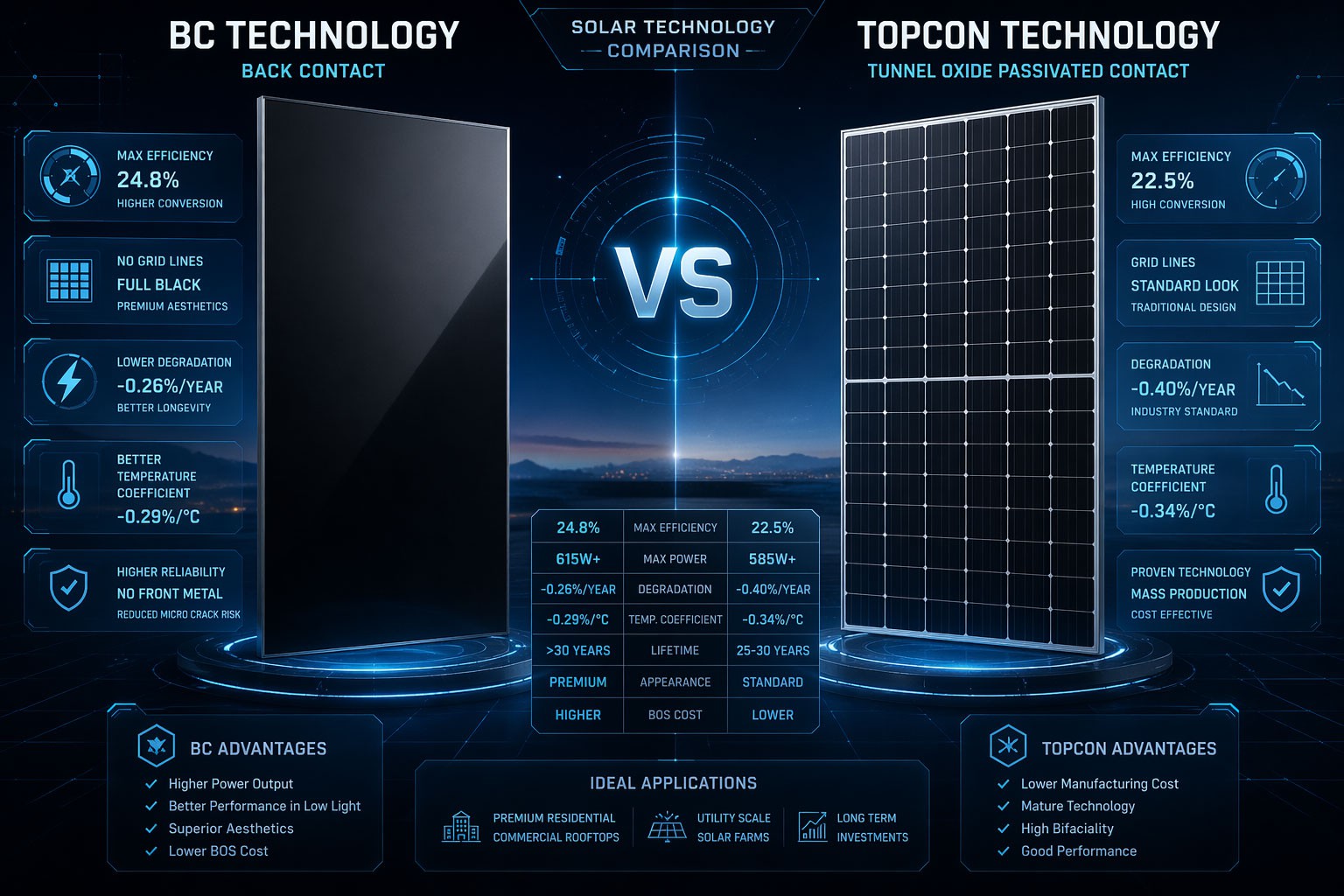
3. Comparison of BC Modules and TOPCon Modules: Characteristics in the European and American Markets
In the European and American markets, BC modules and TOPCon modules form a differentiated competition pattern, each with advantages in different scenarios. The specific comparison is as follows:
|
Characteristics |
BC Modules |
TOPCon Modules |
Impact on European & American Markets |
|
Front Appearance |
Gridless, all-black and aesthetic |
With grid lines, general aesthetics |
BC modules are far superior, with significant premiums in residential and industrial/commercial distributed scenarios |
|
Conversion Efficiency |
25.5%-26.6% |
25%-26% |
BC modules are slightly higher, with 5-8% more power generation per unit area than TOPCon modules |
|
Bifaciality Rate |
70%-80% |
85%-90% |
Large-scale ground-mounted power stations: TOPCon modules are superior; Distributed scenarios: BC modules have no obvious impact |
|
Temperature Coefficient |
Better (-0.30~-0.32%/℃) |
Good (-0.33~-0.35%/℃) |
BC modules are more suitable for high-temperature environments in Europe and North America in summer, with better power generation stability |
IV. Outlook for Q2 2026 and Future Trends
Combined with the current development trend of the BC module market in Europe and America, it is expected that in Q2 2026 and the future period, the industry will show four major development trends, continuously promoting the mainstream process of BC modules in the European and American markets.
1. Confirmation of Mainstream Status, Continuous Deepening of Scene Penetration
BC technology has officially become the mainstream choice in the European and American distributed PV markets from the past "niche high-efficiency technology". At the same time, with the landing of Aiko's 600MW large-scale ground-mounted power station order, the application of BC modules in large-scale ground-mounted power stations will also gradually expand, with continuous deepening of scene penetration.
2. Sustained High Premium Trend, Tight Supply and Demand Pattern Difficult to Change in the Short Term
In the short term, affected by factors such as tight global BC module production capacity supply, rising raw material costs, and strong demand in the European and American markets, the high premium of BC modules in the European market (0.015-0.03 USD/W) will be maintained, becoming the core growth point of PV enterprises' profits.
3. Intensified Market Competition, Technology and Cost Become Core Barriers
At present, about 20 global PV giants (including Longi, Aiko, Tongwei, Trina, JinkoSolar, etc.) have fully entered the BC technology track. In 2026-2027, the speed of technological iteration and cost control capabilities will become the core barriers for enterprises' competition, and the industry concentration is expected to further improve.
4. Potential Release of the North American Market, Local Production Capacity is the Key
If the U.S. PV trade barriers ease in the future, or the local production capacity of leading Chinese enterprises in North America is successfully put into operation, the North American market is expected to replicate the explosive growth trend of BC modules in Europe and become another core growth pole of the global BC module market.
In general, the European and American BC solar module market in 2026 is in a golden period of rapid development, with multiple positive factors such as order explosions, technological iterations, and scene expansion. The industry has broad development prospects. In the future, we will continue to pay attention to the latest trends of the BC module market in Europe and America, providing timely and comprehensive information references for industry partners.
Information Sources
1. Longi Green Energy Official Announcement (2026 Q1-Q2)
2. Aiko Solar Global Cooperation News Release (March 2026)
3. European Photovoltaic Industry Association (EPIA) Market Report (Q1 2026)
4. U.S. Department of Energy (DOE) PV Industry Development Report (April 2026)
5. Global Solar PV Market Research Report by BloombergNEF (2026)
6. Cooperation Announcements of Solarpro, Neoen, BM Energy and other enterprises
Keywords
2026 BC Solar Modules; Europe & America PV Market; BC Module Orders; HPBC Modules; ABC Modules; PV Technology Iteration; Solar Module Price; North American PV Policy; ITC Policy; BC vs TOPCon