


What Shortcomings Do Photovoltaics Need To Improve If It Wants To Serve As The "Main Power Source"?
Source: China Photovoltaic Industry Association CPIA
On December 15, 2023, the "2023 Photovoltaic Industry Annual Conference" was successfully held in Suqian, Jiangsu. The leaders' dialogue was hosted by Li Junfeng, executive director of the China Energy Research Association, and included Trina Solar Chairman Gao Jifan, Longi Green Energy Chairman Zhong Baoshen, Sungrow Vice Chairman Gu Yilei, Canadian Solar President Zhuang Yan, Huawei Photovoltaic Products Line President Chen Guoguang, Sunman New Energy Chairman Shi Zhengrong, and Chint New Energy Chairman Lu Chuan attended the meeting and participated in the dialogue session. The dialogue guests conducted in-depth exchanges and discussions on the opportunities and challenges faced by the development of the photovoltaic industry, as well as how photovoltaic companies can better implement environmental, social and governance (ESG) sustainable development and other issues.
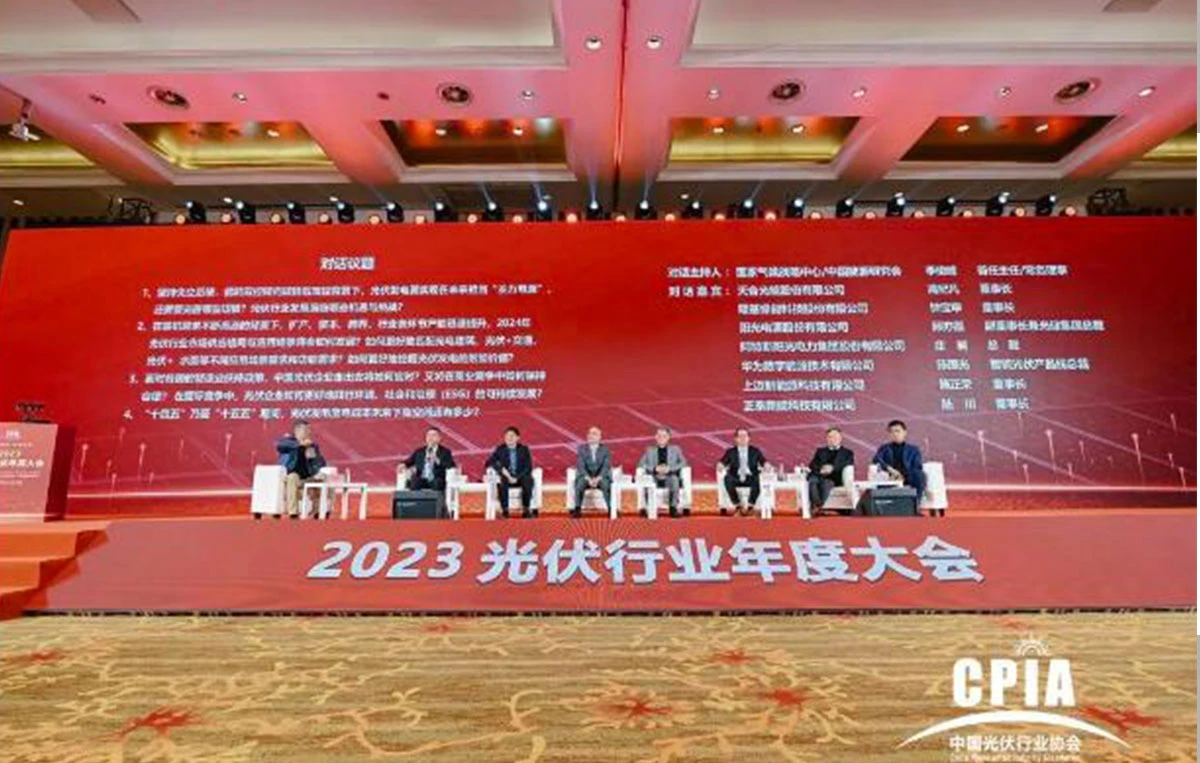
Q: Under the background of insisting on establishing first and then breaking, and shifting from dual control of energy consumption to dual control of carbon emissions, if photovoltaic power generation is to serve as the "main power source" in the future, what shortcomings need to be improved? What opportunities and challenges does the development of the photovoltaic industry face?
Gao Jifan:
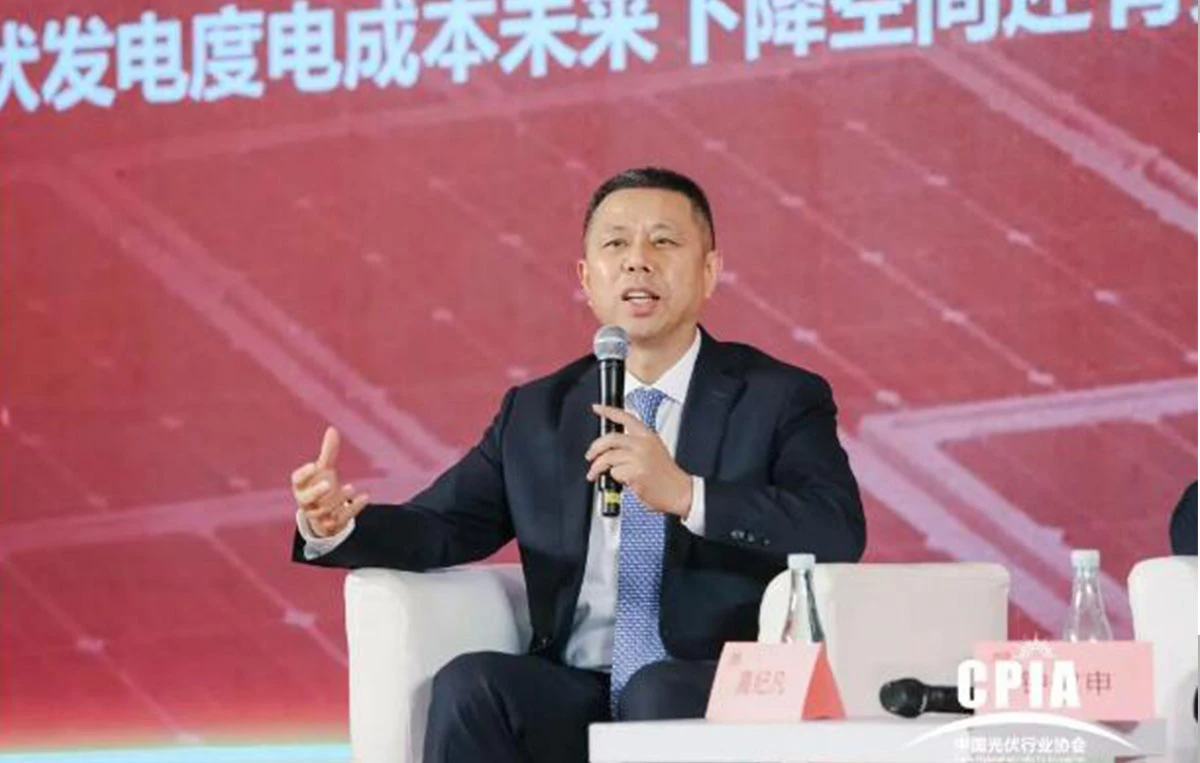
According to the central government's "build first and then destroy" policy, for energy development, first of all, in the power energy system, the newly added renewable energy power must meet or exceed the annual new electricity demand, so as to ensure that all uses of the national economy Electricity is guaranteed by renewable energy sources. In order to achieve the above goals, the current annual installed capacity of wind, solar and hydropower is about 400 to 500 billion kilowatt-hours. This year, if photovoltaic power is 200 GW, wind power is 60 GW, plus other hydropower, etc., the newly added electricity next year may exceed 400 billion degrees. Moving forward, the key factor in how to ensure a sustained and steady increase in new installed capacity is that the newly added electricity from new energy sources is used instead of discarded. Therefore, it is necessary to build a grid-friendly system with broad wind, solar, and storage synergy, so as to support the dominant position of new energy in new electricity in the future, and even account for 100% of new electricity in the future.
Not only that, if the power system takes the lead in achieving carbon peaks and carbon emission reductions before 2025, it will also make an important contribution to the country's carbon peak in 2030. In the power system, how to achieve carbon emission reduction and how to balance the original carbon emissions of fuel, coal and gas are the broad contributions of renewable energy, which is fundamental. Previously, all parties around the world reached a consensus that the key to achieving the goal of three times the renewable energy power generation in 2020 in 2030 is to rely on the power system to take the lead. If the carbon emissions of the power system reach a peak or carbon emissions reductions are better accomplished, the goal of tripling growth by 2030 will definitely be achieved.
Zhong Baoshen:
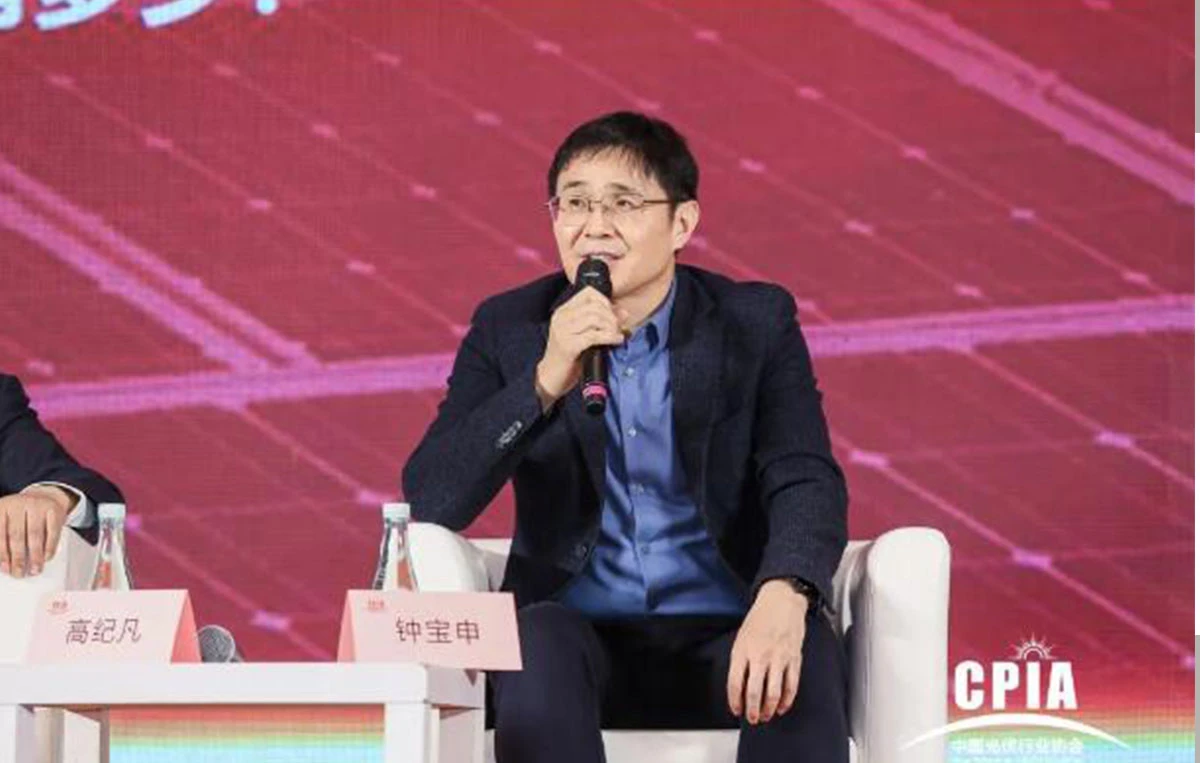
At the just-concluded COP28, all parties around the world reached consensus on carbon emission reduction and carbon peaking. In addition, everyone has also seen the supporting capabilities of the global energy transformation. The so-called supporting capabilities mean that the energy transition requires green energy alternatives, and the alternatives are globally affordable. The current cost of photovoltaic power generation is very low. At the same time, this technology can also support the low-carbon transformation of global energy. Because of such conditions, the goals of COP28 have the basis to achieve them.
In the past, China's photovoltaic development was still an addition to the original power system, so photovoltaic installation and development relied on adapting to the energy system of the past power grid. However, as the proportion of photovoltaic installations increases, the past grid architecture, dispatching model and other solutions need to be suitable for the situation after the large proportion of photovoltaic installations. At present, the safe and normal operation of the entire power grid system is facing great pressure. Although the photovoltaic business is developing rapidly, energy transformation is not achieved overnight. It is a system and requires system changes. Now, photovoltaics are making adaptive arrangements on the original power system. In the future, we need to consciously innovate and adapt to this system, so that we can ultimately promote changes in the global energy system.
This change not only requires continuous publicity and work by photovoltaic companies, but also requires more participants, such as power grid planning and design, system and mechanism designers, collaborative advancement of other technical professions, and overall changes in source, grid, load and storage. Only with the joint collaboration of the whole society can the transformation and upgrading of the energy system be completed. On the one hand, we must quickly promote photovoltaic construction, but we must also balance the synergy of other relevant parties, which requires time and effort. This will ultimately make the power grid system self-consistent and better integrate us with the social environment. This transformation is ultimately a solution accepted by the entire society.
Gu Yilei:

To further promote renewable energy, two aspects are important.
First, costs continue to fall. Recently, the entire industry has been involution, which is difficult for enterprises. However, for the entire industry, it has promoted cost reduction, which is a relatively positive direction. Whether it is photovoltaics or wind power, all links in the industrial chain are reducing costs and increasing efficiency. However, in addition to technical costs, the decline in non-technical costs in recent years has not been ideal, such as land costs, etc. These require the integration of industries and the policy support of multiple departments.
The second is the problem of consumption. Renewable energy needs to be absorbed by the power grid and needs the cooperation of energy storage. A lot of energy storage has been installed in recent years, but the utilization rate is very low, and reasonable rules have not been formulated yet. Photovoltaics have been installed, and energy storage has also been installed, but energy storage is useless, so the further expansion of photovoltaic installed capacity will be restricted. China is currently stuck here. This problem must be solved. Some provinces are currently conducting pilot projects. This problem should be solved soon. More photovoltaic and wind power installations require more energy storage. After the energy storage is installed, more photovoltaic and wind power can be consumed. This is mutually reinforcing.
I believe that with the joint efforts of everyone and the coordinated development of all links, the cost will be further reduced, and there will be very broad room for development in the future.
Zhuang Yan:

First, the collaboration of multiple energy sources is conducive to the consumption of photovoltaics, because different types of energy sources provide different types of complementary capacity. The biggest opportunity for photovoltaics at present is that its cost is already low enough. Further cost reduction will be reflected in the reduction of the cost of the entire system. At the same time, more attention should be paid to reducing the cost of electricity and overcoming obstacles to the sustainable development of photovoltaics. These are more important issues. The cooperation between photovoltaics and other energy types should be based on a fair carbon emission charge.
In addition, energy storage can be introduced in distributed links, but energy storage needs to introduce capacity electricity prices. Only in this way can the entire photovoltaic industry cooperate and compete with other types of energy, and lead the development of energy storage to the right path.
The two biggest issues for the future development of photovoltaics are consumption and future large-scale and sustainable development. One of the consumption issues is collaboration, the other is policy, and a very important one is the introduction of carbon emission charging policy. Large-scale development requires the industry to make efforts to expand application scenarios, otherwise bottlenecks will soon appear in the next development. Green hydrogen will develop significantly in the next five years or so, and floating photovoltaics and BIPV still have a long way to go. Walk.
Chen Guoguang:

There is a lot of room for photovoltaic growth in the future, but for photovoltaics to become the real main power source, challenges and opportunities coexist, and the challenges are different in different scenarios.
Power station scenario: From an economic point of view, the cost per kilowatt hour is no longer a problem. In the future, the cost per kilowatt hour will continue to decrease, giving it greater advantages. The most important problem now is the problem of grid consumption. It is necessary to change the original new energy control model so that photovoltaic power generation can move from adapting to the grid to supporting the grid and then to strengthening the grid. Through grid forming technology and standard construction, the switch from current source control to voltage source control is realized, with strong inertia support, instantaneous voltage stabilization and fault ride-through, improving active and reactive power control and response capabilities, and actively mitigating frequency and Voltage fluctuations can significantly increase the proportion of new energy in power stations. This is a core technology that we need to break through together.
Distributed scenario: The cost of photovoltaic systems is gradually reduced. From the past pursuit of return on investment to the current pursuit of return on investment, the development logic has changed. In the past, it was only installed on roofs with good lighting conditions. Now, due to the reduction in system costs, roof resources can be fully utilized and multiple modules can be installed to generate more electricity, significantly increasing the system investment return. In addition, as the usable roof area increases exponentially, the risk on the DC side increases. Safety issues need to be paid enough attention to ensure the long-term safe and stable operation of the system. In the future, with the significant increase in distributed installed capacity, if accommodation problems arise, the experience of power stations supporting the power grid can also be applied to distributed scenarios.
Shi Zhengrong:

First, look at the entire power system from photovoltaic products. The photovoltaic industry has developed so rapidly in the past two decades. As a product, it can be said that it has reached the ultimate level, whether in terms of conversion efficiency, cost, production capacity, supply chain, etc., it is impeccable. The cost of the photovoltaic industry is already low enough and does not need to be lowered any further. Currently, 1 yuan per watt is already low enough. If the cost of the photovoltaic industry is lowered further, the photovoltaic industry will not make any money, and it may not bring more returns to the entire power system. Achieving 3 times the installed capacity or even more is a goal that is too simple for the photovoltaic industry and can be achieved soon. The current bottleneck of industrial development is not in product manufacturing but in the entire power system. The power system is not yet fully adapted to the intermittent type of photovoltaic and wind energy. The situation of a large proportion of Internet access requires top-level design on the one hand and the ability to quickly promote the development of intelligent grid connection.
In addition, the photovoltaic industry needs innovation. It is not only the innovation of photovoltaic products, but also in-depth thinking about what we can do from the perspective of the power system. Personally, I agree with distributed generation. If it is distributed in a relatively small area, it can be solved, and it can be solved with relatively small resources and strength. The application scenario is a big problem. Accelerating distributed on-site consumption through more application scenarios may make some contribution to photovoltaic production capacity in the near future.
Lu Chuan:

Achieving the 30-year global renewable energy installation target is a systematic effort. From a national perspective, to achieve such a big goal, more tasks are assigned to development and reform, energy and other related systems. When the project is actually promoted, it involves many departments. In this case, during the systematic construction process, everyone's understanding of the goal or the pressure to achieve the goal is deviated, then the respective departments will have to issue corresponding policies. , there will also be some lags or shortcomings, which has also caused the current situation of renewable energy development today. For example, sometimes when an enterprise completes a project, the land policy of "Three Zones and Three Lines" will be adjusted after a period of time, and the project may become inconsistent with the regulations. This situation is very common, and some land resources that could have been used cannot be used in the end. The implementation ultimately failed to translate into corresponding clean energy installed capacity.
The second question is whether a deterministic plan can be given for the consumption capacity of new energy and disclosed in a timely manner. When establishing power station grid connection points in overseas areas, the government uses bidding methods to realize the resources of the grid connection points. It is very clear how much consumption capacity will be built in the next few years. After that, the power generation companies will sign an agreement with it. If the power grid company defaults on the construction, it will be You can sue it. However, in China, the information in this area is not transparent, and there is no definite plan. As a result, many projects will become "barrier lakes" when they move forward, and problems with accommodation suddenly arise. Whether it is distributed or ground power stations, they are now encountering such problems.
If information disclosure can be done more fully, I believe that many companies will choose whether to promote photovoltaic storage projects, and it will not cause very big difficulties in power generation and consumption in the short term. Foreign countries will put forward corresponding requirements on power quality for grid connection points and power supply points, which also leaves room for technological innovation for enterprises. At present, the approach adopted in our country is basically: if the power generation cannot be consumed, a few hours of energy storage are required uniformly, which does not leave much technical choice.
In terms of integrating with international standards, the surplus of clean energy has made electricity prices very low, causing new energy sources to compete with electricity prices just like traditional energy sources. If there are international standards for carbon footprint and green electricity use, then when companies gain an advantage in carbon footprint, they will naturally buy more green electricity, which will form an additional price difference, which can make up for the drop in electricity prices caused by the excess supply of clean energy. Loss. This is also a better development direction and can encourage the construction of power points.