


PV Agricultural Technology Application---Sudan
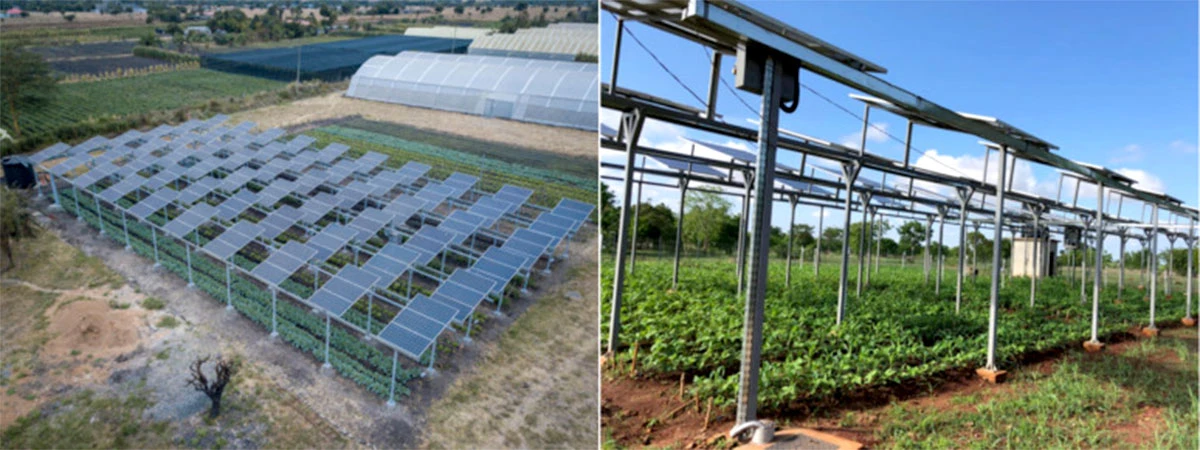
In the application of photovoltaic agricultural technology in Sudan, the selection of photovoltaic panels needs to comprehensively consider extreme environmental conditions such as high temperature, dust, drought, and the coordinated needs of agricultural production and power generation.
Jinko Solar's Tiger Neo series double-glass 590W mono solar panels have become a benchmark choice for cost-effectiveness and durability due to their high-efficiency power generation, resistance to extreme environments and long life.

I. Core advantages of Jinko double-glass 590W mono panels
1. High-efficiency power generation and high-temperature stability
Power and efficiency:
The peak power of 590W is matched with a conversion efficiency of 23.4%, and 72 N-type TOPCon cells are used, which increases the power generation by 3%-5% compared with traditional P-type modules. Its bifacial power generation characteristics (bifaciality of 85%) have significant power generation gains on the rear side under high-reflectivity surface conditions such as the Sudanese desert, which can increase power generation by an additional 10%-30%.
High temperature performance optimization:
The power temperature coefficient is - 0.29%/°C, which is better than - 0.35%/°C of P-type modules. In Sudan's summer, the annual power generation can be increased by 2% in high temperature environments above 50°C. The back ventilation design of the module can reduce the operating temperature by 15°C and reduce the risk of hot spot effect.
2. Durability in extreme environments
Double glass structure and anti-dust design:
Adopting double-sided tempered glass and POE film packaging, it has excellent anti-PID (potential induced degradation) performance, passed TÜV SÜD triple PID-p certification, and only decayed by 1.26% under high voltage stress. The surface nano coating reduces dust adhesion by 80%, and with dynamic tilt adjustment technology, it can automatically flush sand accumulation and reduce maintenance frequency.
Mechanical load resistance: It can withstand 2400Pa wind load and 5400Pa snow load. It has passed DEKRA's IEC TR 63279 comprehensive sequence aging test, simulating multi-dimensional stresses such as desert high temperature and ultraviolet radiation, to verify its long-term reliability.
3. Long life and low attenuation
Provide a 30-year power warranty, with a first-year attenuation of ≤1%, and a linear attenuation of only 0.35%/year, which is far lower than the industry standard. N-type cells naturally have no LID (light-induced degradation) effect, ensuring long-term stable output.

II. Analysis of the adaptability of Sudanese agriculture to photovoltaic technology
1. Climate conditions and agricultural needs
High irradiation and high temperature environment: The average annual sunshine in Sudan exceeds 2,300 hours, and the local temperature reaches more than 50°C in summer. The low temperature coefficient and high bifaciality of Jinko's double-glass 590W can effectively deal with the high temperature attenuation problem and improve the stability of power generation.
Drought and dust challenges:
The average number of days with sandstorms in desert areas exceeds 60 days per year, and the dust particles are small and highly corrosive. The self-cleaning coating and dynamic tilt adjustment technology of JinkoSolar double-glass modules can reduce dust deposition losses to less than 5%, without the need for frequent manual cleaning.
Agricultural irrigation needs:
Sudanese agriculture relies on rainwater irrigation. PV pumping systems (such as Shenzhen Tianyuan's project in northern Sudan) use JinkoSolar modules, with an investment payback period of only 3-5 years, pumping 800 tons of water per day for irrigation, significantly reducing the operating costs of diesel pumps.
2. Policy support and technology localization
Policy dividends:
Sudan's Investment Law and Customs Law implement tax exemption policies for renewable energy equipment (such as photovoltaic modules), reducing the initial investment costs of projects. The establishment of the China-Sudan Joint Laboratory (such as the cooperation between Hubei University of Technology and Sudan's National Energy Research Center) promotes technology transfer and localized production.

Technical adaptability:
Jinko double-glass 590W can be combined with the "uniform glass plate fixed photovoltaic agricultural system". The light intensity is adjusted by inserting the grooved glass plate in a gap, which not only ensures the photosynthesis of crops, but also reduces the evaporation of soil water by more than 50%. In addition, combined with the bandpass filter film, the spectrum required by plants (blue, red, and far-red light) can be separated, and the power generation efficiency is increased to 14%, while optimizing the growth environment of crops.
3. Economic efficiency and scale potential
Reducing BOS costs:
The high power of 590W reduces the number of components and the amount of mounting brackets. For example, in an 11MW project, the number of components can be reduced by 2.5% and the land occupation can be reduced by 1,200 square meters, significantly reducing the cost of land and brackets.
Off-grid system advantages:
Sudan has a low grid coverage rate. The application of Jinko components in off-grid photovoltaic pumping systems (such as the Shenzhen Tianyuan case) has verified its reliability in areas without electricity. After replacing diesel pumps, the operating cost is reduced by 70%.

III. Market verification and future trends
1. Global and regional application cases
Middle East and African markets:
Jinko supplied Oman's 487.5MW photovoltaic hydrogen production project, and performed well in high temperatures of 50°C and strong dust environments; Togo's 50MW ground power station uses Jinko modules, and its annual power generation meets the needs of 158,000 households.
China-Sudan cooperation project:
China Energy Construction and Sudan signed a memorandum of cooperation on energy and electricity, and Jinko's high-efficiency modules may be introduced in the future to support Sudan's photovoltaic agricultural development.
2. Technology upgrade and localized production
N-type technology mainstreaming:
The global N-type silicon wafer market share is expected to reach 45% in 2025. Jinko plans to put into production a 10GW battery and module factory in Saudi Arabia, radiating the Middle East and African markets including Sudan.
Intelligence and operation and maintenance optimization:
Combined with AI intelligent operation and maintenance system, real-time monitoring of module temperature, power generation and other parameters can be carried out to optimize the coordinated efficiency of agricultural irrigation and power generation. Sudan is gradually building up its photovoltaic glass raw material supply and component assembly capabilities, and Jinko can support localized production through technology transfer.
In general, Jinko's Tiger Neo double-glass 590W mono solar panel is the right way to develop photovoltaic agriculture in Sudan. It has high power generation efficiency and is particularly resistant to local high temperatures and dust. It is stable for 20 to 30 years. More realistically, it can save money and land, help solve the problem of irrigation electricity, and make agriculture and energy supply more reliable. As the project is rolled out in the future, Sudan may become a good example of photovoltaic agriculture in Africa.