

As a supplier of Jinko 590W Bifacial solar panels, I often get asked, "Do these panels work in cloudy weather?" Well, let's dig into this question and break it down.
First off, let's understand what makes the Jinko 590W Bifacial solar panel special. These panels are designed with bifacial technology, which means they can generate electricity from both the front and the back sides. This is a huge advantage because it allows the panels to capture more sunlight and convert it into electricity.
Now, let's talk about how solar panels work in general. Solar panels convert sunlight, which is made up of photons, into electricity through the photovoltaic effect. When photons hit the solar cells, they knock electrons loose, creating an electric current. On sunny days, there are plenty of photons to go around, so solar panels can produce a lot of electricity. But what happens on cloudy days?
Clouds act like a natural filter, reducing the amount of direct sunlight that reaches the solar panels. However, it's important to note that sunlight consists of both direct and diffuse light. Even on cloudy days, there's still a significant amount of diffuse light available. The Jinko 590W Bifacial solar panels are quite good at capturing this diffuse light. The bifacial design helps in this regard as the back side can capture the reflected and scattered light from the surroundings, like the ground or nearby structures.
Studies have shown that bifacial solar panels can perform better than their monofacial counterparts on cloudy days. The ability to harvest light from multiple directions gives them an edge. The Jinko 590W Bifacial panels have high - efficiency solar cells that are designed to make the most of whatever light is available. They have a relatively low degradation rate, which means they can maintain a decent level of performance over time, even in less - than - ideal weather conditions.
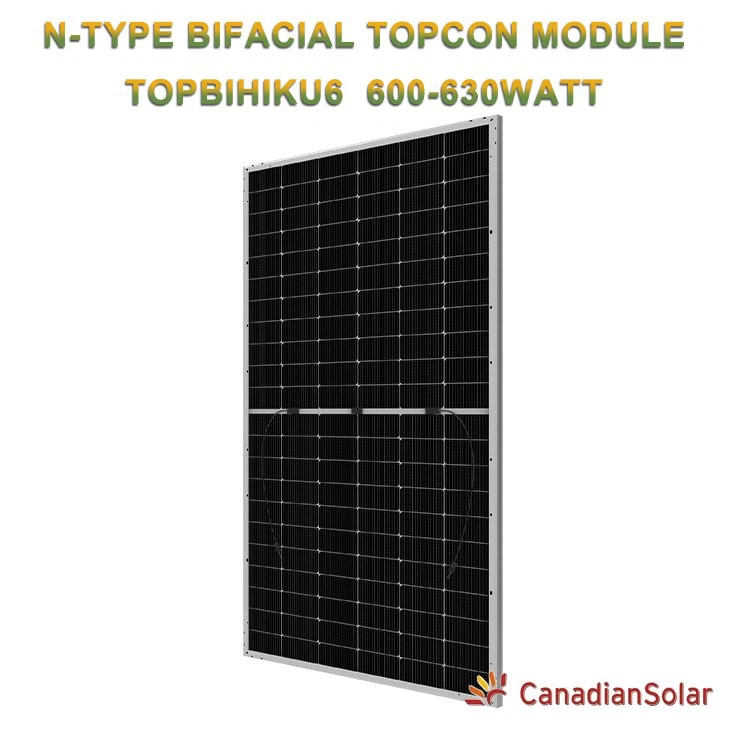
Let's compare the Jinko 590W Bifacial solar panel with some other popular models in the market. For example, the Canadian 630W is a high - power panel. While it has its own set of advantages, the Jinko 590W Bifacial panel's ability to capture light from both sides gives it an advantage on cloudy days. Similarly, the Jinko 445W is a reliable option, but the 590W Bifacial model has a higher power output and better performance in low - light conditions due to its bifacial design. The JA Solar 405W and Risen 405W are also good panels, but they may not be as effective as the Jinko 590W Bifacial in cloudy weather.
Another factor to consider is the location. If you're in an area with a lot of cloud cover, the Jinko 590W Bifacial solar panels can still be a great investment. For example, regions with a maritime climate or those that experience frequent overcast skies can benefit from the panel's ability to capture diffuse light. Even in winter months when days are shorter and clouds are more common, these panels can continue to generate electricity.
The installation of the Jinko 590W Bifacial solar panels also plays a role in their performance on cloudy days. The panels should be installed at an optimal angle to maximize the capture of both direct and diffuse light. The ground surface below the panels can also affect their performance. A light - colored or reflective ground surface can increase the amount of light reflected onto the back side of the panels, further enhancing their energy production.
It's important to manage expectations. On extremely cloudy or rainy days, the power output of the Jinko 590W Bifacial solar panels will be lower compared to sunny days. But they will still produce some electricity, which is a lot better than having no power at all. And over the long run, the cumulative energy production can be significant, especially when you consider the panel's durability and long - term performance.
If you're thinking about going solar, especially in an area with variable weather conditions, the Jinko 590W Bifacial solar panels are definitely worth considering. They offer a good balance of high power output, efficiency, and performance in low - light conditions. And if you're interested in other high - power options, you might also want to check out the Jinko 625W.
In conclusion, the Jinko 590W Bifacial solar panels do work in cloudy weather. Their bifacial design, high - efficiency cells, and ability to capture diffuse light make them a reliable option for generating electricity even when the sun isn't shining brightly. If you're looking to invest in solar energy, I'd be more than happy to discuss your needs and how these panels can fit into your project. Whether you're a homeowner looking to reduce your electricity bills or a business owner aiming for more sustainable energy solutions, the Jinko 590W Bifacial solar panels could be the right choice for you. So, don't hesitate to reach out for a detailed discussion about your solar energy requirements.
References

- Solar Energy Industries Association. (2023). Understanding Solar Panel Performance.
- National Renewable Energy Laboratory. (2023). Bifacial Solar Panel Technology Report.