



Italy's BESS Market in 2026: What the MACSE Auction and RWE's Ragusa Project Mean for Suppliers
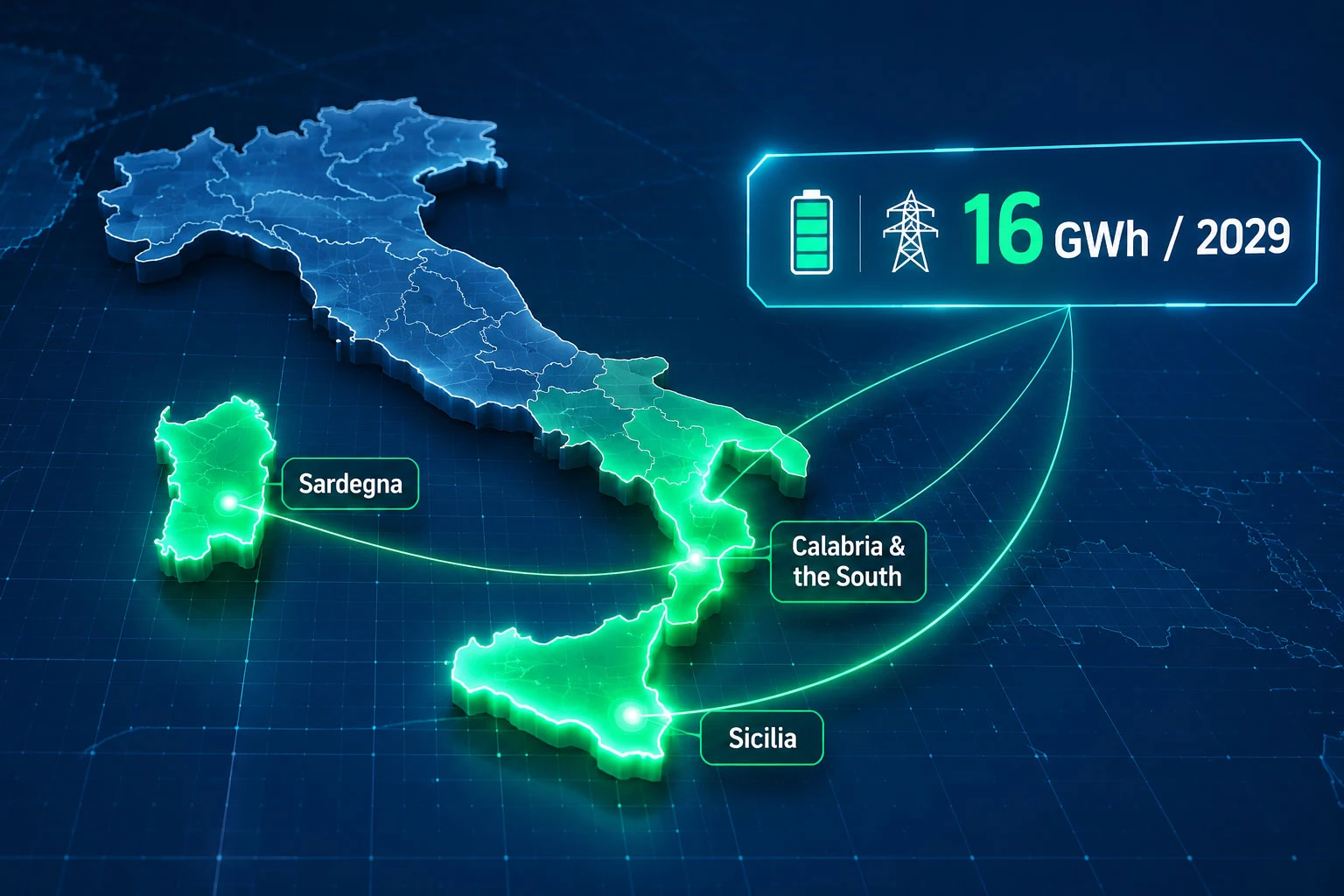
On 24 November 2026, Terna will hold Italy's second MACSE auction. It targets 16 GWh of storage for 2029 delivery, following a first round on 1 October 2025 that procured 10 GWh under 15-year contracts for 2028 delivery. Two weeks earlier, RWE started building its first Italian battery, the Ragusa BESS in Sicily.
Put together, these two events show where Italy's storage market stands. A large share of demand is now backed by long-term contracts, and it is concentrated in the south. For suppliers, the useful question is not whether Italy is "booming". It is which projects will turn auction volume into purchase orders, and when.
Italy BESS at a glance
Auction: MACSE round 2, 24 November 2026, 16 GWh, delivery year 2029
Contract length: 15 years
Price ceiling: ARERA set the maximum premium at €27,000/MWh/year in resolution 332/2026, up from the €22,000 proposed in consultation. The first auction's cap was €37,000.
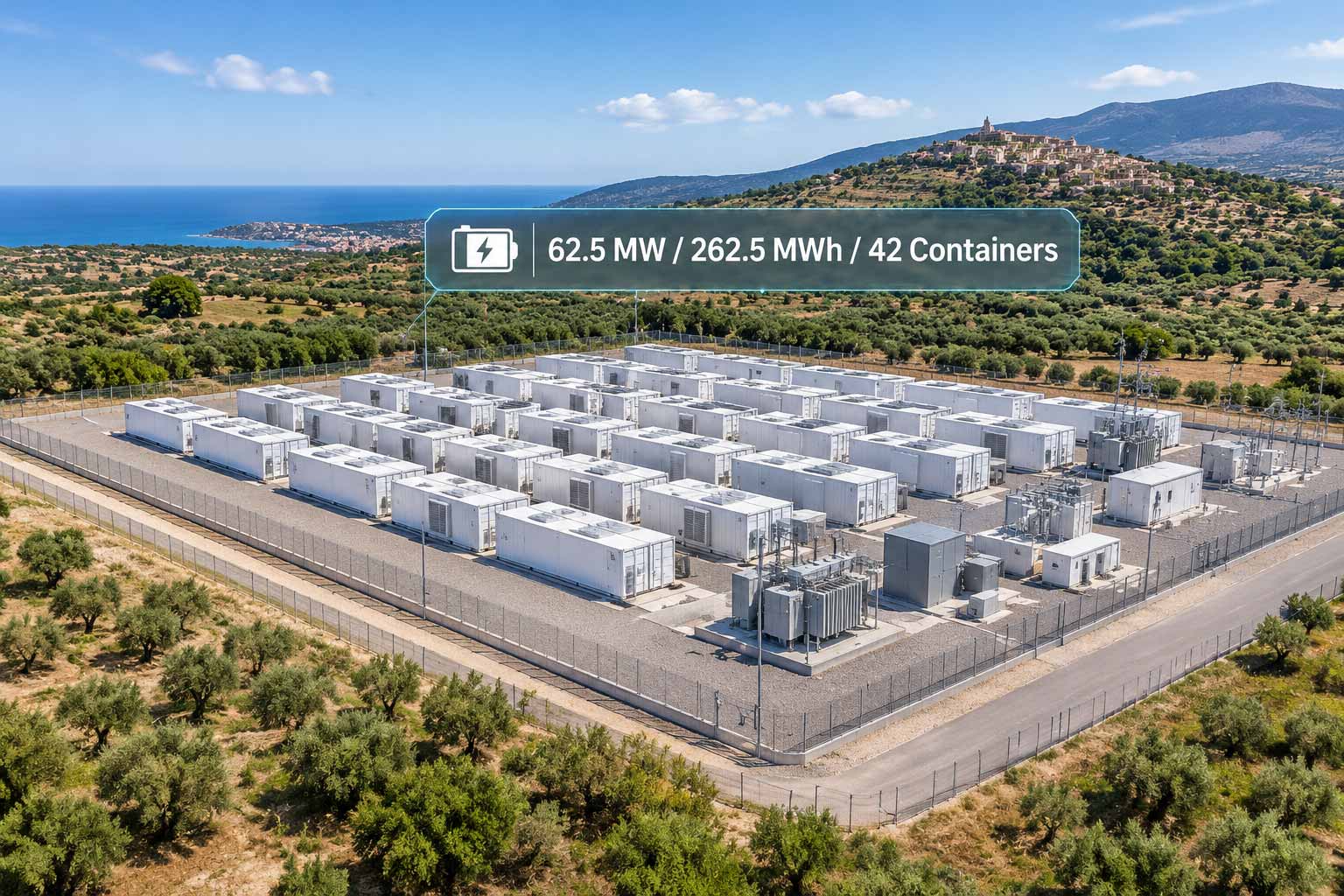
Flagship project: RWE Ragusa, 62.5 MW / 262.5 MWh, Sicily, commissioning planned end of 2027
Long-term need: Terna estimates Italy needs 32 GWh of storage by 2030.
How the MACSE auction works
MACSE is Terna's mechanism for buying storage capacity ahead of time. Developers bid for the right to a long-term, fixed-price contract. Terna accepts offers from the lowest price upward until the target volume is filled. A project that wins gets revenue certainty for 15 years, which is what banks want to see before lending.
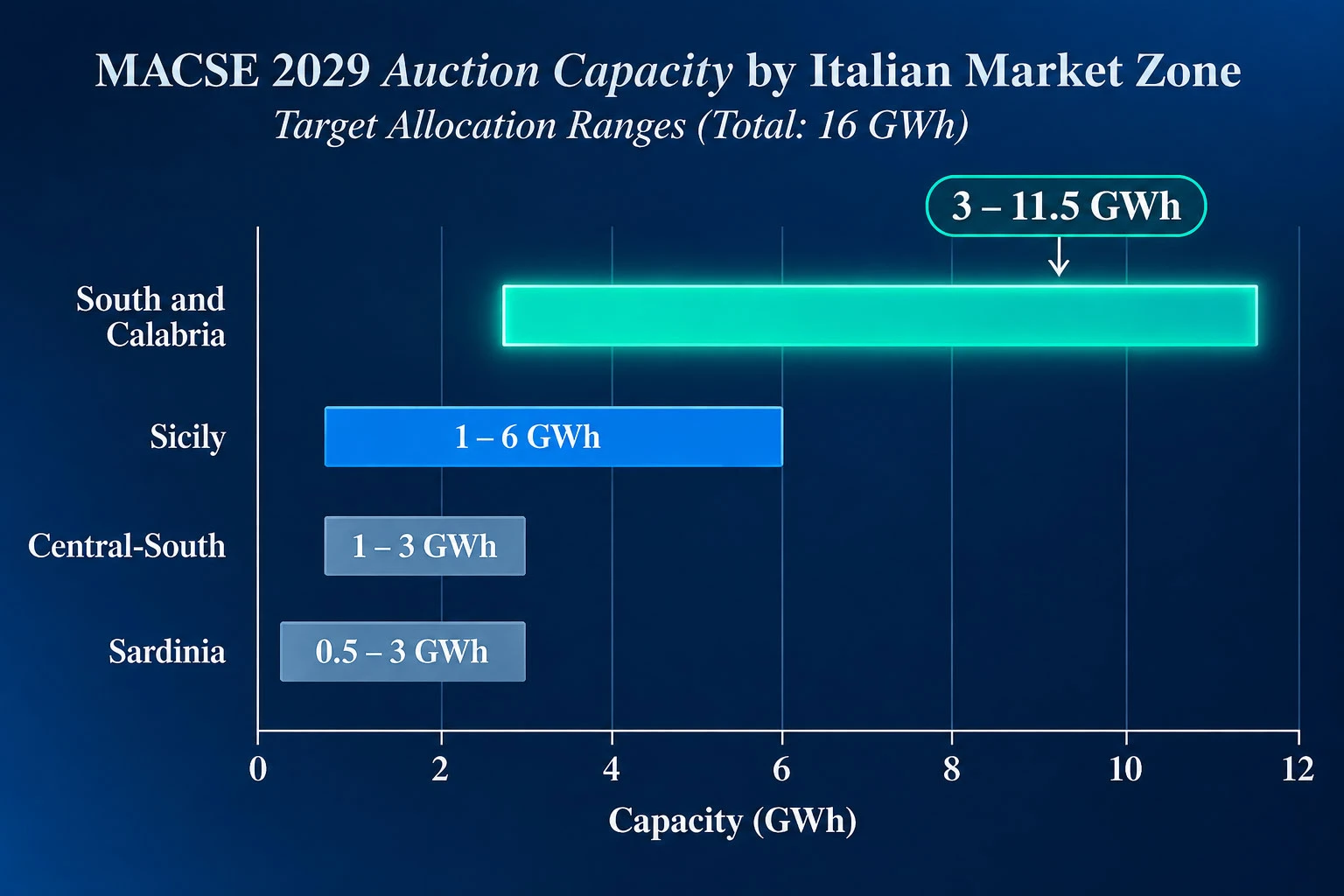
The 2029 round asks for about 60% more capacity than the previous one. The volume is also split by geography, with most of it in the south:
|
Market zone |
Minimum |
Maximum |
|
Central-South |
1 GWh |
3 GWh |
|
South and Calabria |
3 GWh |
11.5 GWh |
|
Sicily |
1 GWh |
6 GWh |
|
Sardinia |
0.5 GWh |
3 GWh |
Source: ranges published ahead of the auction; the total volume is 16 GWh.
The ranges are flexible, so the final split depends on bids. The table shows that most of the new capacity will be in the south and on the islands. It will not be spread evenly across the country.
Winning the auction is not the same as placing an order. A winner still has to finish permitting, financing, grid connection and procurement before equipment is bought. A realistic supplier plan therefore starts after the results are published. The first task is to find out who won in which zone. The second is to reach them while they are still choosing an integrator and a battery supplier.
What Ragusa shows about utility-scale projects
RWE's Ragusa project is a useful reference because the numbers are public.
62.5 MW, 42 containers of lithium-ion batteries, 4 hours at full output, 262.5 MWh nominal capacity.
Commissioning is scheduled for the end of 2027.
RWE did not name its supplier. Energy-Storage.news noted that 42 containers imply about 6.25 MWh each, before any overbuild.
A small detail is worth noting. 62.5 MW for four hours comes to 250 MWh, while the announced figure is 262.5 MWh. The difference is nominal capacity above the delivered figure, which is how projects normally allow for degradation. When you quote or compare projects, check whether a figure is nominal or usable energy.
The broader point is that buyers like RWE evaluate the whole system, not cell prices. A containerised 6 MWh-class product has to come with a battery management system, thermal management, fire protection, a power conversion system and a clear commissioning scope. Suppliers that can document all of these will have an easier time in tender reviews.
What Italian buyers ask suppliers for
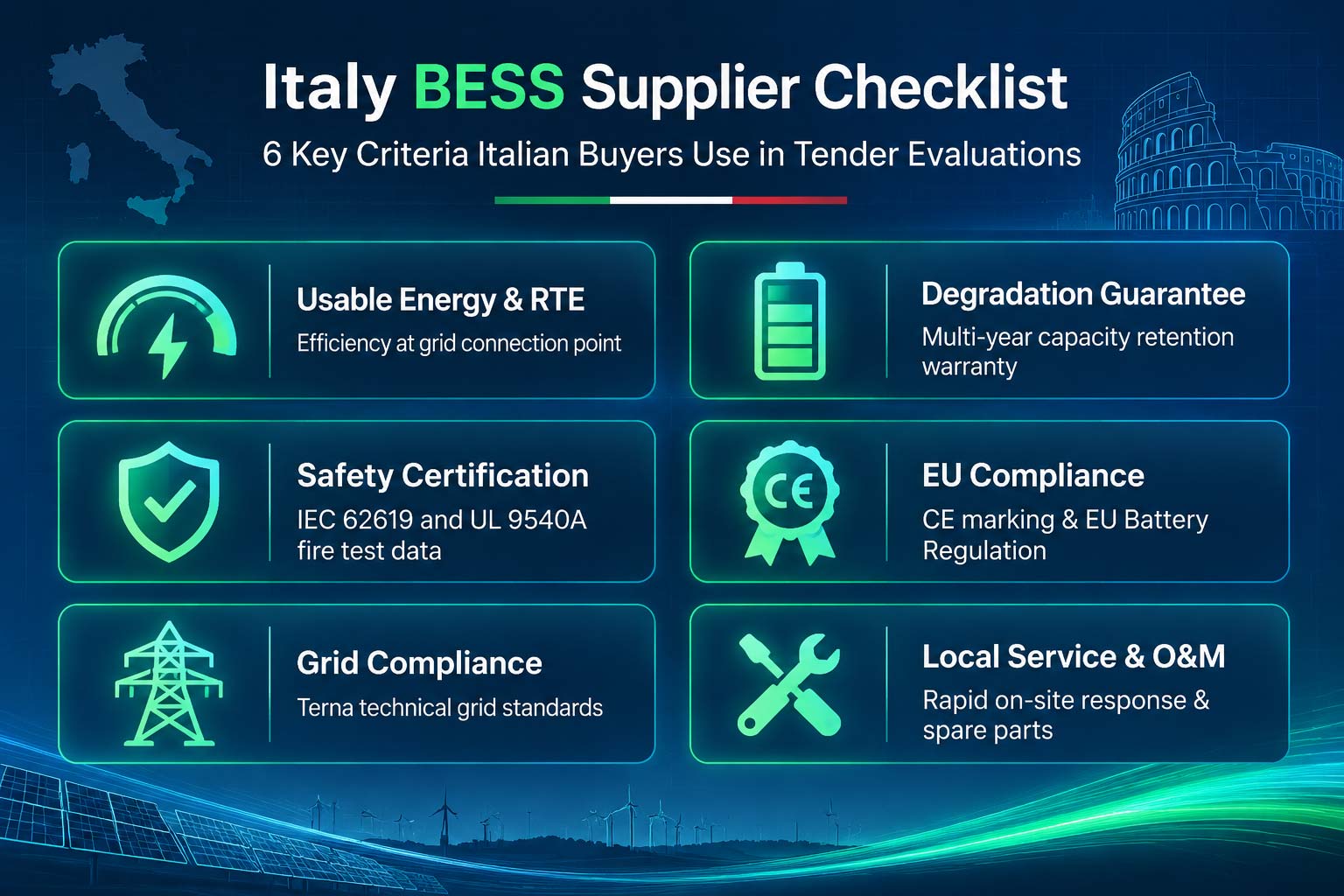
Based on how utility-scale tenders are typically evaluated in Europe, these are the points that decide shortlists:
Usable energy and round-trip efficiency at the point of grid connection, not just at cell level.
Degradation guarantee. Capacity retention over years and cycles, with clear operating conditions attached.
Safety documentation. UN 38.3 transport tests, IEC 62619 for cells and packs, and large-scale fire test data such as UL 9540A, which insurers often request.
EU compliance. CE marking and the EU Battery Regulation, whose obligations for industrial batteries phase in over 2025–2027. Confirm current dates before you quote.
Grid compliance. Terna's technical requirements and the local network operator's rules.
Local service. Who responds on site if an alarm triggers, and how fast spare parts arrive.
LFP is the chemistry most often proposed for stationary storage, mainly because of its thermal stability and cycle life. The chemistry matters less than the evidence behind the product and the party that stands behind the warranty.
Utility-scale, C&I and residential: different markets
Utility-scale is where MACSE and projects like Ragusa sit. It is driven by contracts, financing and grid connection, so sales cycles are long and the customers are developers, EPCs and integrators.
C&I storage is driven by bill reduction, solar self-consumption and peak-demand management. Projects are smaller and the customers are factories, logistics sites and commercial buildings. Buyers there care about payback time and installer support.
Residential storage depends on rooftop solar and consumer incentives. It is a separate channel with distributors and installers, and it should not be planned together with utility-scale.
Treat these as three different markets with different customers, margins and certifications.
A practical plan for suppliers
Before 24 November: prepare datasheets, test reports and a clear warranty statement in English. Italian developers will ask for them within days of winning.
After the results: map winning projects by zone, and contact the developers and EPCs behind them.
Partner locally. An Italian integrator or EPC often decides the equipment list, and direct quotes alone rarely get you onto it.
Offer service as part of the bid. Commissioning support and remote monitoring are part of what buyers compare.
FAQ
Q: What is MACSE in Italy?
A: MACSE is the mechanism through which Terna procures new electricity storage capacity in competitive auctions. Winners receive long-term contracts, 15 years in the rounds held so far.
Q: When is the second MACSE auction?
A: 24 November 2026, with 16 GWh targeted for delivery in 2029.
Q: How big is RWE's Ragusa battery?
A: 62.5 MW and 262.5 MWh nominal, for four hours of full output, with 42 containers of lithium-ion batteries. It is located in Sicily and is due to be commissioned by the end of 2027.
Q: Does MACSE volume mean immediate orders for battery suppliers?
A: No. Winning projects must still complete financing, permitting, grid connection and procurement first.
Q: Which parts of Italy matter most for new storage?
A: The south and Calabria, Sicily and Sardinia, which together take the largest share of the 2029 target volume.
Planning a BESS project for Italy or elsewhere in Europe? Jingsun supplies photovoltaic products and energy storage solutions to international customers. Send us your project size, duration and grid requirements, and we will respond with a technical proposal.