


EL Detection Of Photovoltaic Power Stations
EL detection of photovoltaic power stations refers to the attempt to identify problems inside photovoltaic modules, including hot spots, cracks, poor contact, etc. This test uses special equipment and techniques, such as thermal imaging cameras and shear testers, to identify potential defects inside the modules. Through this test, the reliability of the modules can be improved and the stability and efficiency of the photovoltaic power station can be ensured.
In order to ensure the safe and stable operation of photovoltaic power stations and improve their power generation efficiency, regular power station inspections are particularly important.
EL detection (electroluminescence detection) is a very important non-destructive testing technology.

1. The basic principle of EL detection:
EL detection, the full name is electroluminescence detection, which uses the electroluminescence effect of photovoltaic modules at a specific voltage to capture the luminescence of the modules through professional testing equipment, so as to judge the internal defects and potential problems of the modules.
EL detection can achieve excellent detection of modules without destroying the structure of the modules, so it is widely used in daily maintenance and fault diagnosis of photovoltaic power stations.
2. The main advantages of EL detection:
1) Non-destructive:
EL detection will not cause any damage to photovoltaic modules and can be detected without disassembling the modules.
2) Strong intuitiveness:
Through electroluminescent images, defects inside the components, such as cracks, broken grids, and cold solder joints, can be intuitively observed.
3) High efficiency:
EL testing can quickly test a large number of components, improving detection efficiency.
4) High accuracy:
By analyzing the electroluminescent image, the fault type and location of the component can be accurately determined, providing a strong basis for subsequent maintenance and repair.
3. Application of EL detection in photovoltaic power stations In photovoltaic power stations, EL detection is mainly used in the following aspects:
1) Component production quality control
During the production process, EL detection can timely detect the internal defects of the component, thereby controlling the production quality and improving the reliability of the product.
2) Power station operation and maintenance management
Regular EL detection of components in photovoltaic power stations can timely detect potential safety hazards and ensure the stable operation of the power station.
3) Fault diagnosis and repair
When a photovoltaic component fails, EL detection can accurately determine the fault type and location, providing guidance for subsequent fault diagnosis and repair.
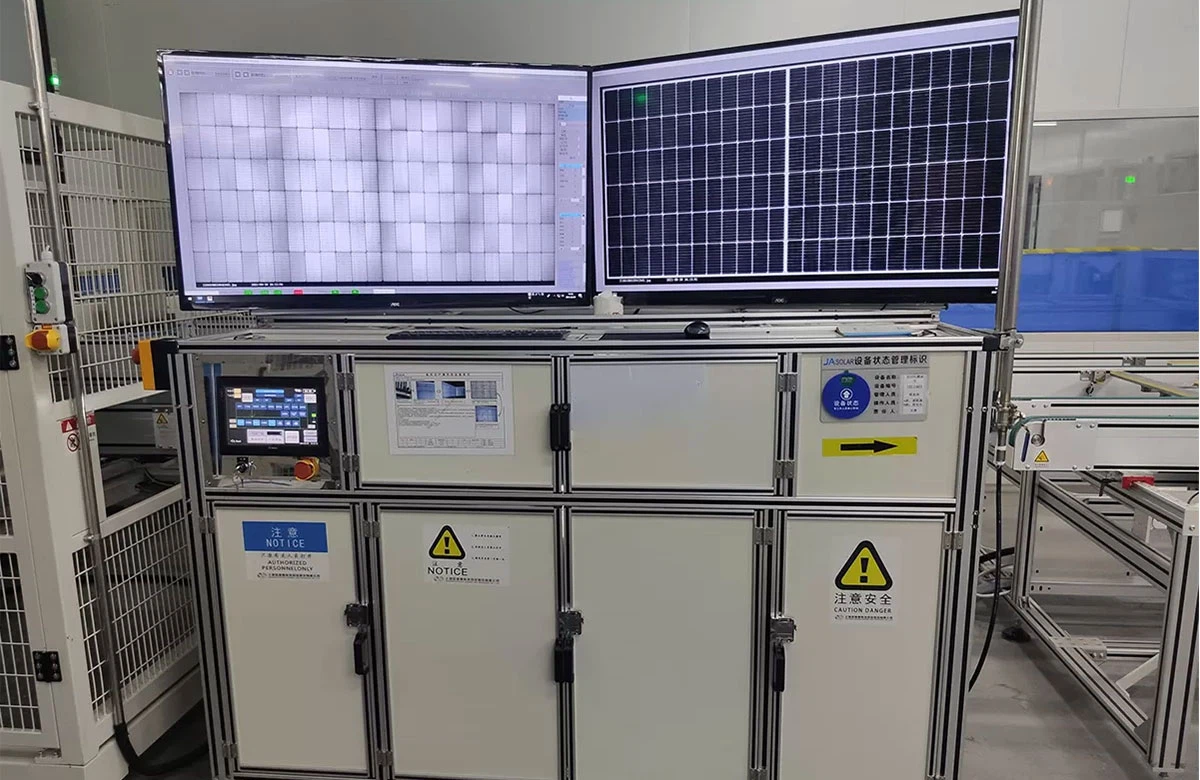
4. Operation steps and precautions for EL testing and operation steps:
(1) Select appropriate testing equipment and environment to ensure that there is no interfering light source during the testing process.
(2) Connect the photovoltaic module to be tested to the testing equipment and set appropriate testing parameters.
(3) Start the testing equipment, observe and record the electroluminescent image of the module.
(4) Analyze the image to determine the internal defects and potential problems of the module.
(5) According to the test results, formulate corresponding maintenance and repair plans.