


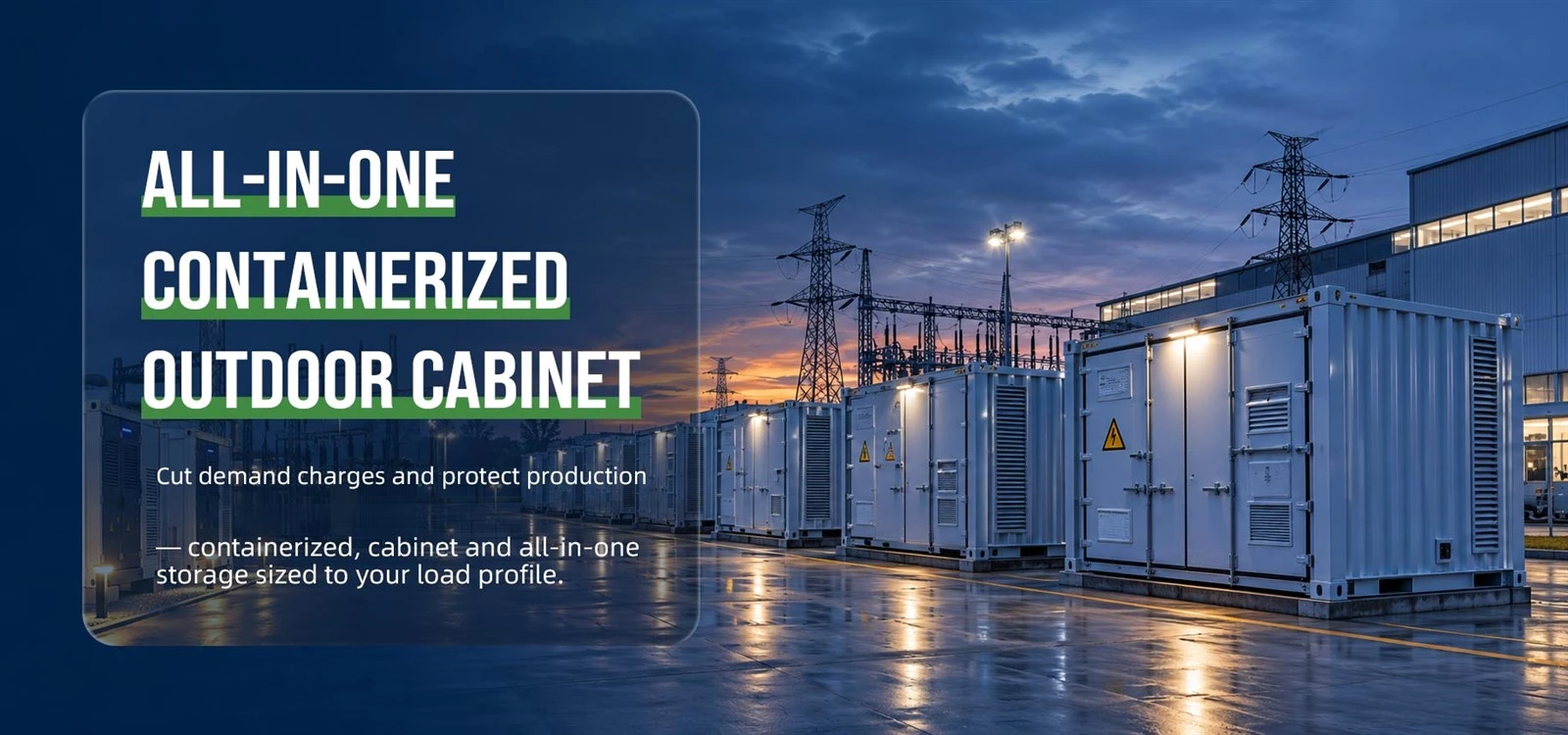
Commercial & Industrial Energy Storage Solutions
Reduce energy costs, manage peak demand and improve power reliability with energy storage solutions designed around your facility's needs.
System capacity range
100 kWh – 2 MWh
Power Conversion Options
Flexible PCS Configurations
Containerized · Outdoor Cabinet · All-in-One
Multiple System Configurations
Who This Is For
Every commercial and industrial facility has different energy consumption patterns. Understanding your load profile is the first step toward choosing the right energy storage solution.
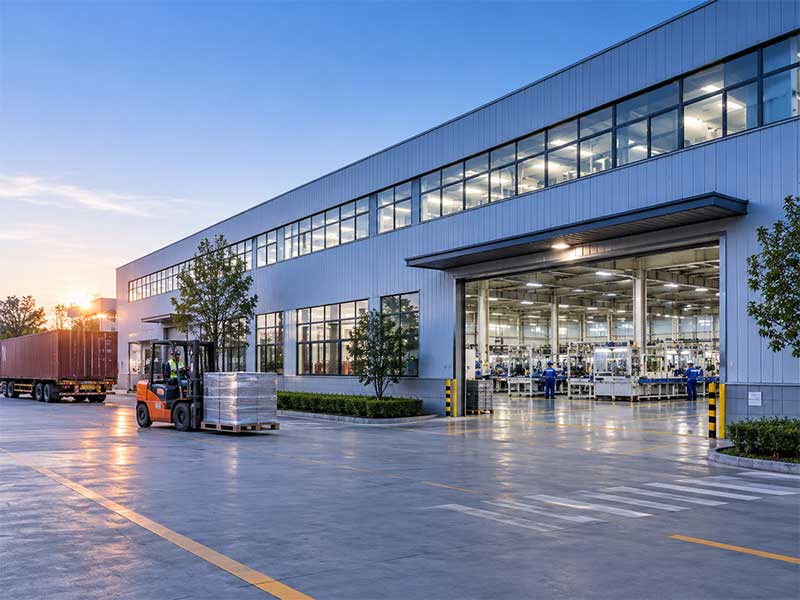
Manufacturing plant
Load profile: A combination of warehouse operations, refrigeration and EV charging, with varying demand throughout the day.
Cares most about: Demand charges and downtime losses
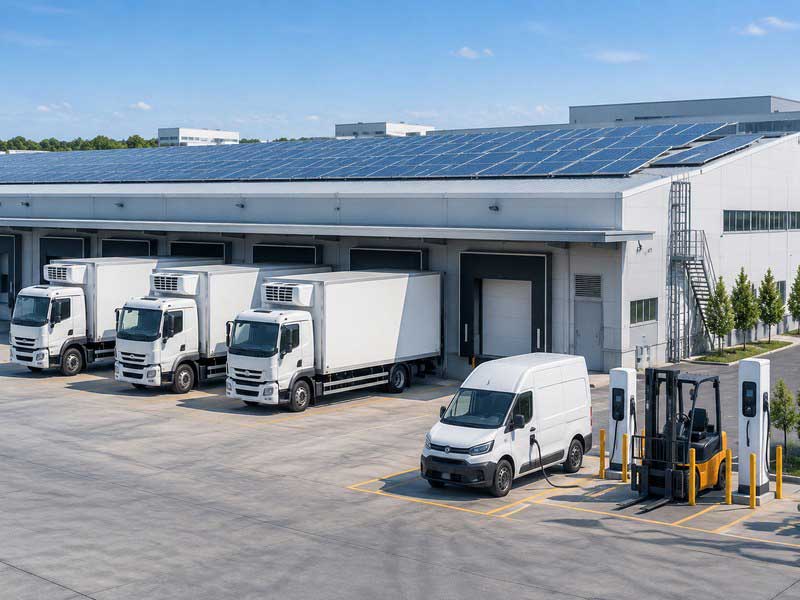
Logistics park
Load profile: Refrigeration and charging loads, with a clear evening peak.
Cares most about: Peak/off-peak price gap and the cost of capacity upgrades
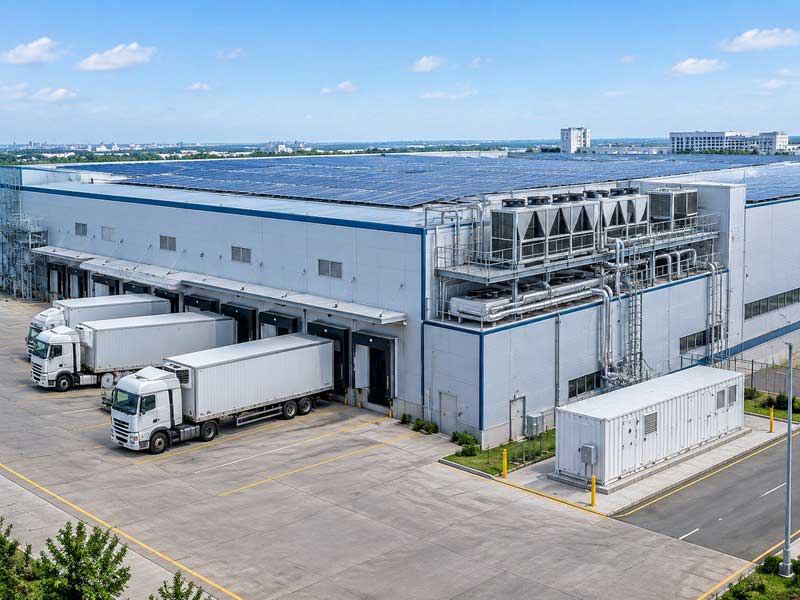
Cold storage
Load profile: Continuous load around the clock. Small gap between peak and off-peak, large total consumption.
Cares most about: Product loss after a power cut, and supply reliability
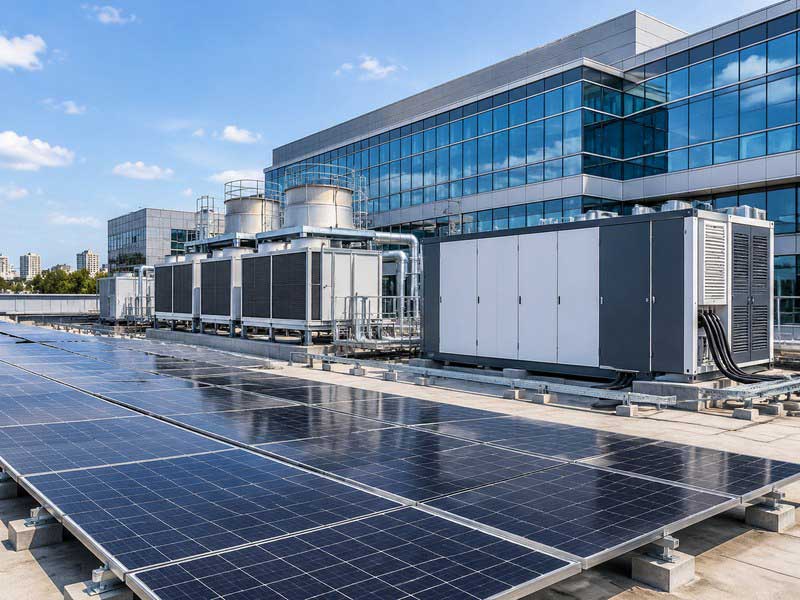
Commercial complex
Load profile: Air-conditioning led, with a sharp summer peak.
Cares most about: Demand charges and spare transformer capacity
The Three Costs You Are Already Paying
Most sites count one cost, the energy they buy. Two more sit on the same bill or behind it, and leaving them out is why storage can look like a poor investment on paper.
1. Energy charges (per kWh)
You pay for every kWh. Storage earns here by buying in cheap hours and using the power in expensive ones. The return depends on your peak/off-peak price gap and how many times a day the battery cycles.
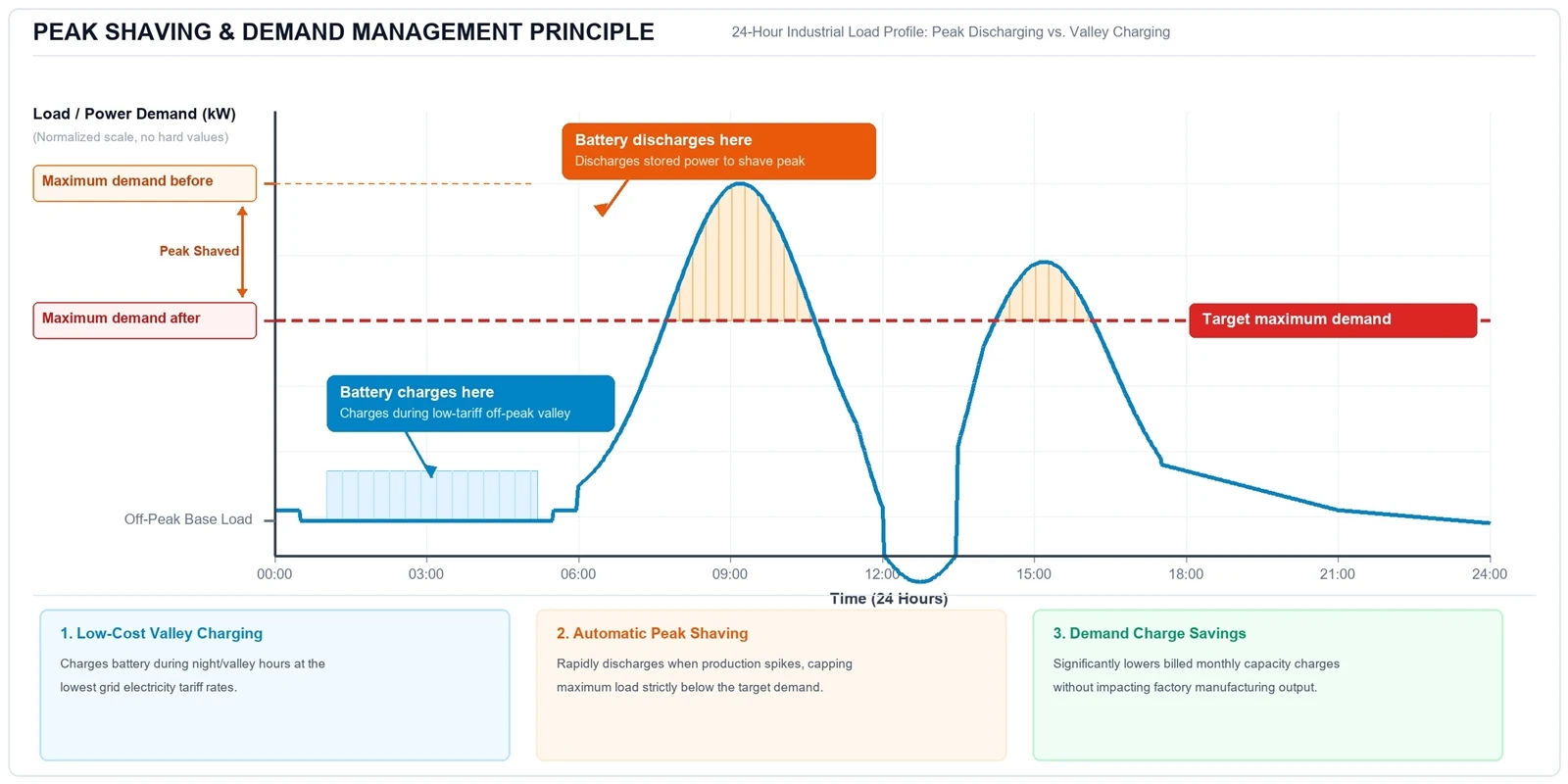
2. Demand charges (per kW)
Where your tariff has a demand charge, you pay for your highest power draw in the billing period, not for how much you used. The maximum demand is measured according to the utility's billing interval, which varies by market. Reducing peak demand during critical periods may help lower demand-related electricity charges.
Where demand is billed, shaving peaks is often worth more than price arbitrage, because you only need to flatten a few dozen hours a year.
|
How to size the shave 1. Take 12 months of load data, in 15-minute intervals if you can get them. 2. Set a target maximum demand. 3. Power to cut (kW) = current maximum demand − target. 4. Energy needed (kWh) = power above target × hours, for your longest peak event, plus a margin for battery ageing. Example: 800 kW maximum, 680 kW target. The PCS must deliver at least 120 kW. If the worst peak averages 90 kW over target for 2 hours, you need about 180 kWh usable. |
3. Outage losses
A stopped line, a broken cold chain, a scrapped batch. This is the hardest cost to quantify and often the real reason for the purchase. Put your own number on it:
|
Cost of one outage = hours down × (lost output per hour + restart cost) + scrapped stock |
|
Site |
What one outage costs |
|
Manufacturing plant |
Idle line hours and scrapped work in progress: [loss per hour] |
|
Logistics park |
Spoiled refrigerated cargo and lost charging service: [loss per event] |
|
Cold storage |
Product value of one chamber: [value per tonne × tonnes] |
|
Commercial complex |
Tenant disruption and emergency response: [cost per day] |
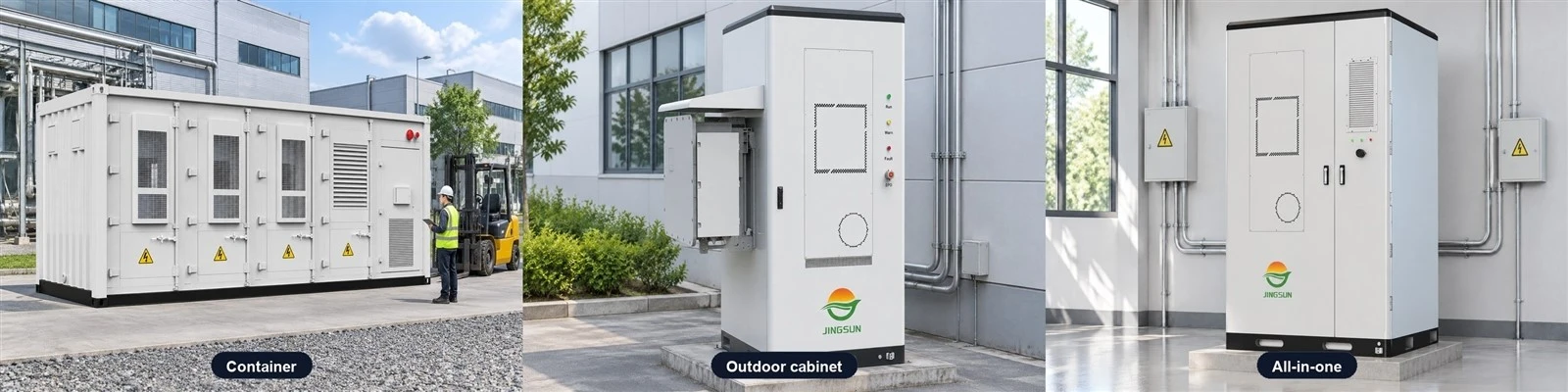
Three Form Factors: Container, Outdoor Cabinet or All-in-One
|
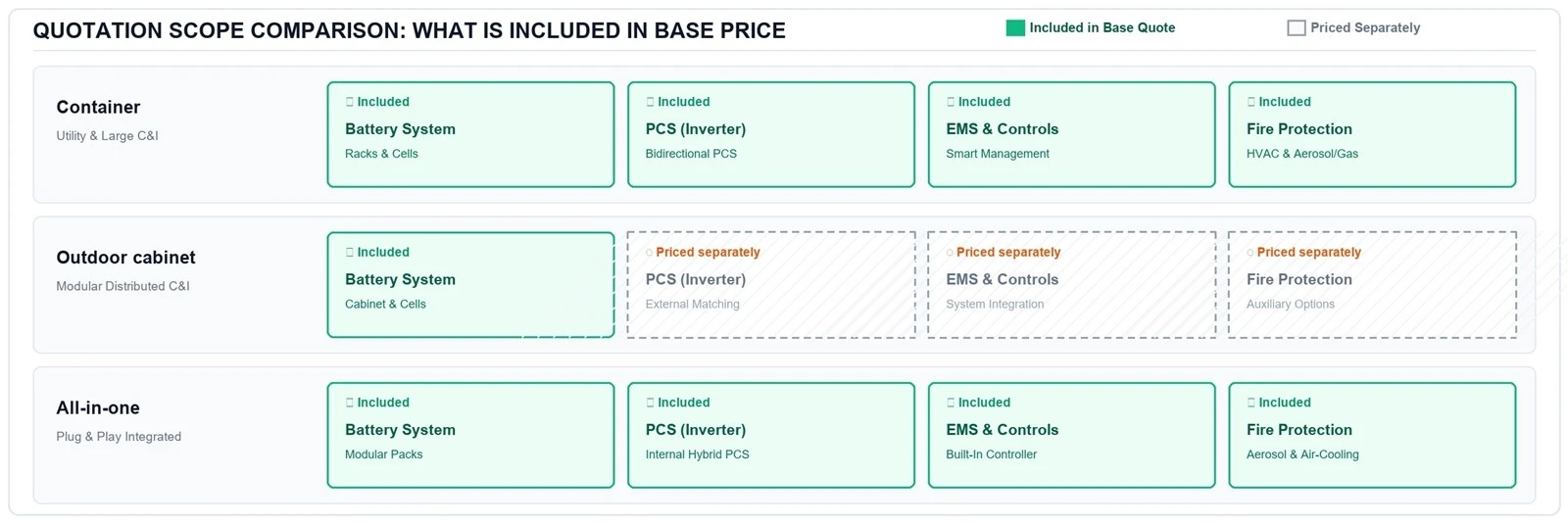
Check one line before you compare prices: does the quote include the PCS? |
|
Container |
Outdoor cabinet |
All-in-one cabinet |
|
|
Typical capacity |
0.5–2 MWh |
Multiple capacity options |
Multiple capacity options |
|
PCS included? |
Yes, 250–1000 kW |
Usually not; supplied separately |
Yes, with EMS and fire protection |
|
DC voltage |
800 V DC |
Model-dependent |
Model-dependent |
|
Footprint |
20 ft pad plus lifting access |
Single cabinet on the floor |
Single cabinet on the floor |
|
Fire protection |
Integrated fire detection and suppression system, depending on the model. |
Model-dependent |
Integrated protection system |
|
Delivery |
Whole container by sea; longest lead time |
Shorter |
Shorter |
|
Best for |
Park-level, MW-scale peak shaving |
A single building, phased rollout |
Small sites that want one package |
A container quote includes the PCS. An outdoor cabinet is usually quoted as battery only, with the PCS and EMS priced separately. An all-in-one cabinet integrates the main system components into one solution. Actual equipment configuration and supply scope may vary by model. Always compare the included components when evaluating different quotations.
Compare them side by side only after you have lined up what each price covers.
See the container ESS pages for datasheets.
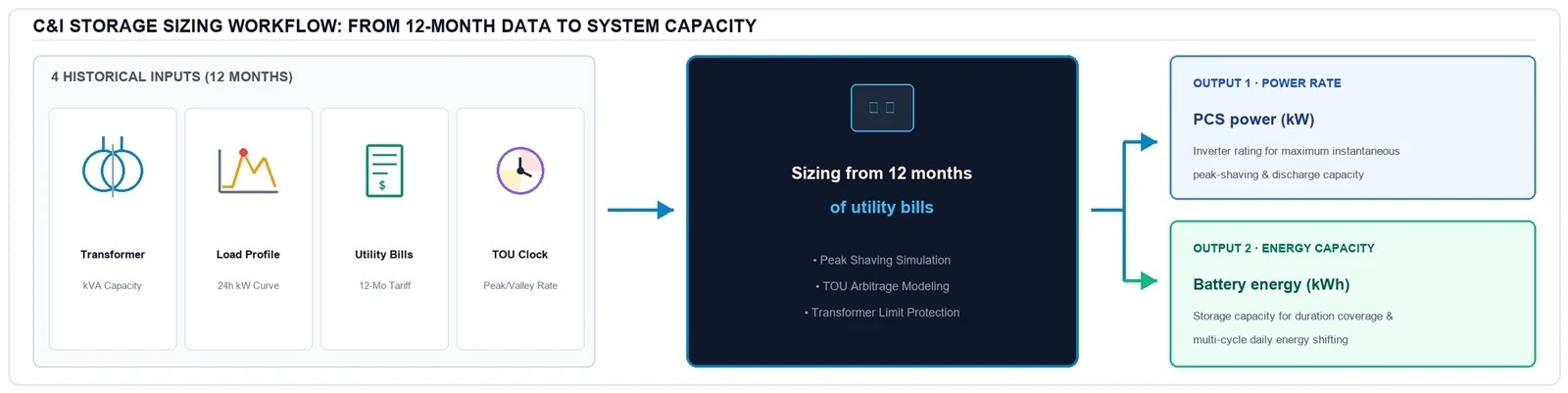
Peak Shaving Battery Storage: How We Size a System
A suitable energy storage system should be configured according to your facility's electricity consumption and operating requirements. The following four inputs help us make an initial assessment.
|
Input |
Where to find it |
What it decides |
|
Transformer capacity |
Transformer nameplate or your utility contract |
Whether you need a grid upgrade |
|
Electricity load profile |
Utility portal or meter data; 12 months of bills at minimum |
Battery energy (kWh) and peak length |
|
Maximum demand |
Your bill, in kW or kVA |
PCS power rating |
|
Peak/off-peak periods |
Your tariff sheet |
Charge and discharge schedule |
Factory rooftop solar: add it second
If you have roof space, factory rooftop solar can charge the battery and cut energy charges. On its own it can miss the demand peak, which often falls in the morning start-up when the sun is low. For some facilities, battery storage can be installed first, with rooftop solar integrated later. The optimal configuration depends on the site's electricity demand, available roof space and energy cost structure.
Demand Charge Reduction and Payback: What Drives the Return
We don't promise a payback period. Tariffs differ too much between countries for any single figure to hold. Four variables decide the return:
Peak/off-peak price gap
Cycles per day
Demand rate
Local incentives
|
Yearly arbitrage = usable kWh × cycles per day × operating days × (peak price − off-peak price) × round-trip efficiency Yearly demand saving = kW shaved × demand rate per kW per month × 12 Simple payback (years) = system cost ÷ (arbitrage + demand saving + other income) |
Illustration, not a quote: 120 kW shaved at 12 per kW per month saves 17,280 a year. A 200 kWh battery cycling once a day for 300 days on a 0.10 price gap at 90% efficiency adds 5,400. Total: 22,680 a year, before any incentive.
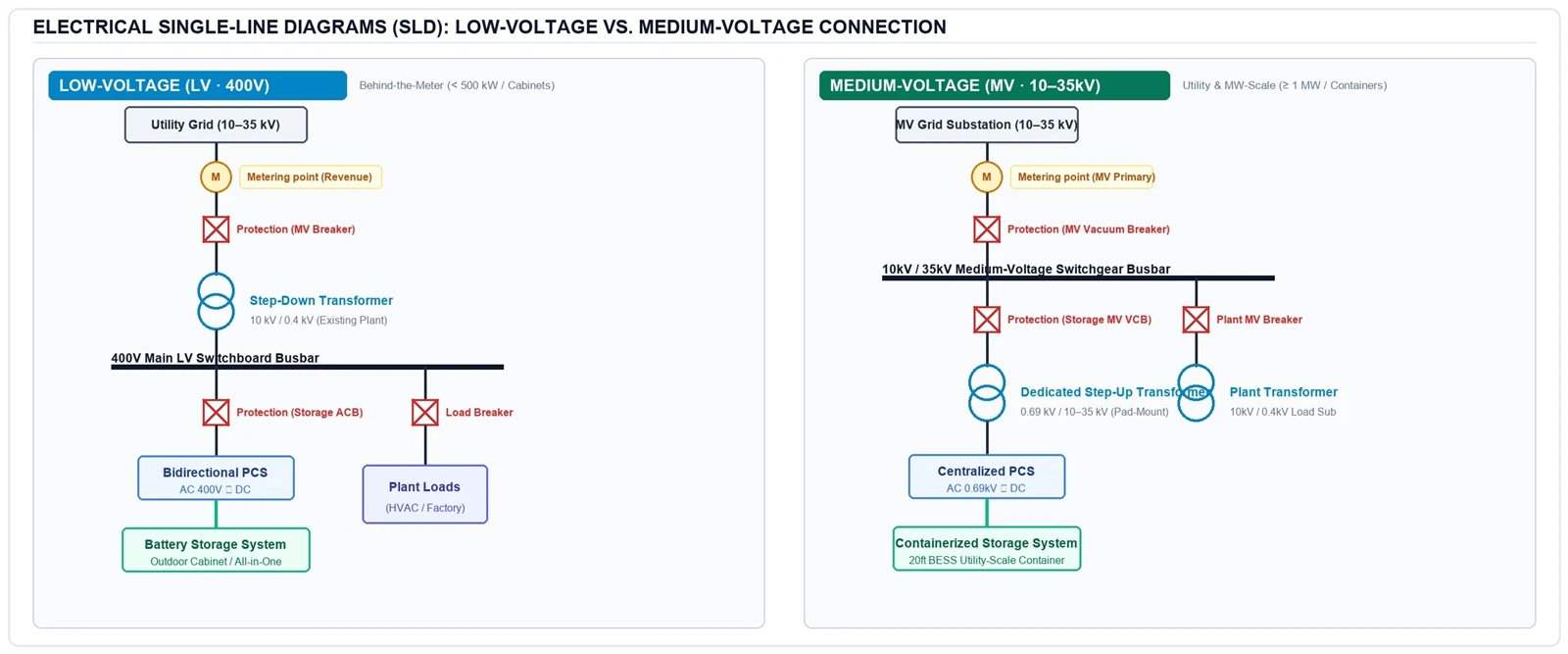
Grid Connection and Compliance
Rules differ by country and the utility has the final say. This is the usual shape.
|
Typical pattern |
Low-voltage connection |
Medium-voltage connection |
|
System size |
Up to a few hundred kW |
Larger systems, often MW-scale |
|
Connection point |
The building's low-voltage board |
Medium-voltage side, through a step-up transformer |
|
What the utility reviews |
Protection settings and export limits |
Grid impact study, protection coordination, often a witnessed test |
The permit route
1. Pre-application with the utility.
2. Grid study and connection agreement.
3. Protection settings agreed.
4. Witnessed commissioning test.
5. Permission to operate.
Fire approval is a separate track with the local fire authority. We supply the system description and test documents.
Safety and Fire Protection
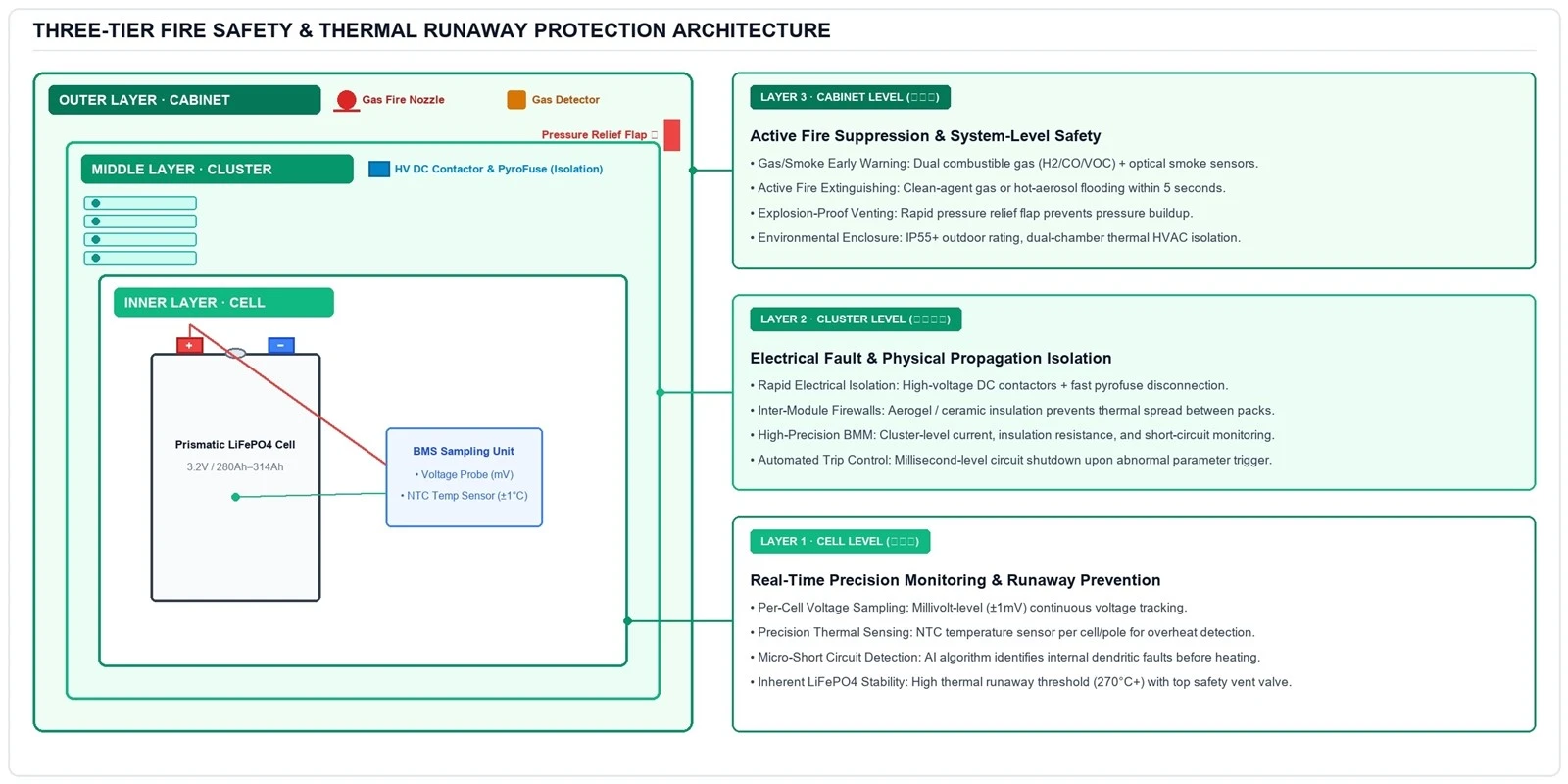
Fire safety is the first concern for most site owners. We protect at three levels, on the assumption that a single cell can fail.
|
Level |
Guards against |
Measures |
|
Cell |
One cell going out of range |
BMS monitors the voltage and temperature of every cell and trips the circuit on a fault |
|
Cluster |
A fault spreading between racks |
Each cluster is isolated by its own protective devices, with temperature sensing |
|
Cabinet |
Fire, gas build-up and pressure |
In-cabinet gas suppression (FM-200 / Novec), combustible gas detection and pressure relief design |
The documents for fire approval are listed in the FAQ below.
Delivery and Commissioning
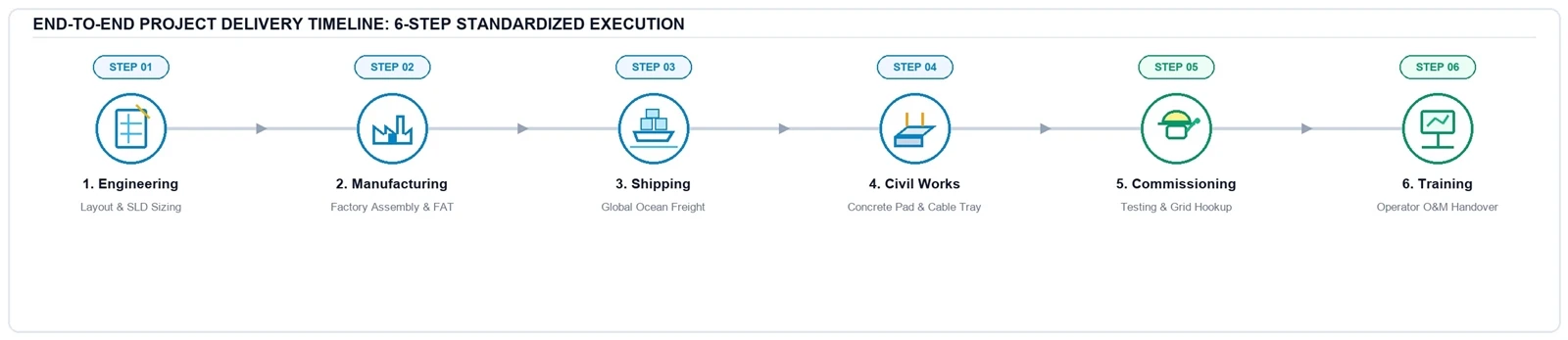
A container ships whole. Here is the path from order to operation.
|
# |
Step |
What happens |
|
1 |
Engineering |
We confirm the size from your load data and issue site drawings. |
|
2 |
Factory build and test |
The container is assembled and tested before it ships. |
|
3 |
Shipping |
Whole container by sea. |
|
4 |
Site works |
Pad, cable routes and the grid connection point, prepared by you or your EPC. |
|
5 |
Commissioning |
On-site tests, EMS connection and grid sign-off. |
|
6 |
Training |
Operator training for your maintenance team. [On site or remote] |
What we need from your site
Foundation
A level pad built to our drawing.
Access
A route and space for lifting equipment.
Power
Connection point and cables ready to the agreed boundary.
Network
A wired link for monitoring.
Permits
Grid and fire approvals in hand before power-on.
People
An electrician from your side at commissioning.
Planning to grow later? Prepare the pad and cable capacity for the final size now, install the first container, and add the rest when you need it.
FAQ
Q: Do I need a new transformer?
A: Usually not for peak shaving. The battery supplies the peak, so the draw on the transformer stays lower. Transformer work comes into play when you are adding load.
Q: Can I install storage without solar?
A: Yes, and many customers start that way. Storage alone cuts demand charges and shifts energy. Solar can follow.
Q: How long will the battery last?
A: [6000cycles] to [80%] of original capacity under [depth of discharge and temperature]. Warranty: [10 years]. Real life depends on how often you cycle and on site temperature.
Q: What do I need for fire approval?
A: Usually a site layout with clearances, the fire protection design, the extinguishing agent datasheet and [large-scale fire test report]. Your local fire authority sets the final list.
Q: Can I add capacity in phases?
A: Yes. Containers suit a plan made up front: prepare the pad and cable capacity for the final size, install one now, add more later. Cabinets can be added one by one.
Q: Can it connect to my energy management system?
A: Through [protocols, e.g. Modbus TCP, IEC 104, MQTT]. Send us your system's interface requirements and we will confirm.
Q: Can it power my site in an outage?
A: Grid-connected mode shaves peaks and shifts energy. Backup mode carries selected loads when the grid fails, within the limits of battery and PCS power, and the system must be configured for it. [Confirm backup availability per model]
Q: How is the warranty handled?
A: [Replace / repair] under warranty, with a response time of [24 hours] .
Get a Load Assessment
Five details are enough for a first assessment, and you probably have them to hand. A commercial and industrial solar storage project is much easier to size once we see your bill.
- Industry
- Transformer capacity (kVA)
- Monthly electricity bill range
- Peak/off-peak price gap
- Do you need backup power?
Need MW-scale storage? See Utility & Infrastructure →
Adding EV chargers? See Mobility & Charging →