

Hey there! As an inverter supplier, I often get asked about how these nifty devices work. So, let's dive right in and demystify the world of inverters.
First off, what exactly is an inverter? Well, an inverter is a device that converts direct current (DC) to alternating current (AC). Why's that important? Most of our household appliances and electrical systems run on AC, but a lot of power sources, like batteries and solar panels, produce DC. That's where inverters come in to bridge the gap.
Let's start by understanding the basic components of an inverter. There are three main parts: the input section, the conversion section, and the output section.
The input section is where the DC power comes in. This could be from a battery, a solar panel, or any other DC power source. The inverter needs to have a stable DC input to work properly. If the input voltage is too high or too low, it can affect the performance of the inverter.
Now, onto the conversion section. This is where the magic happens. The inverter uses a process called switching to convert the DC power into AC power. It does this by rapidly turning the DC current on and off at a specific frequency. This creates an alternating current waveform. There are different types of waveforms that an inverter can produce, such as square wave, modified sine wave, and pure sine wave.
A square wave is the simplest type of waveform. It's basically a series of on-off pulses. While it's easy to generate, it's not very efficient and can cause problems with some sensitive electronics. A modified sine wave is a bit more complex. It's a stepped waveform that approximates a sine wave. It's better than a square wave but still not as good as a pure sine wave.
A pure sine wave is the most ideal waveform. It closely mimics the natural waveform of the power grid. Most modern appliances and electronics are designed to work with a pure sine wave. That's why a lot of high-quality inverters, like the High Frequency Pure Sine Wave Inverter, are designed to produce a pure sine wave.
The output section is where the converted AC power goes out. This is what you'll use to power your appliances. The inverter needs to be able to provide a stable output voltage and frequency. If the output voltage or frequency fluctuates too much, it can damage your appliances.
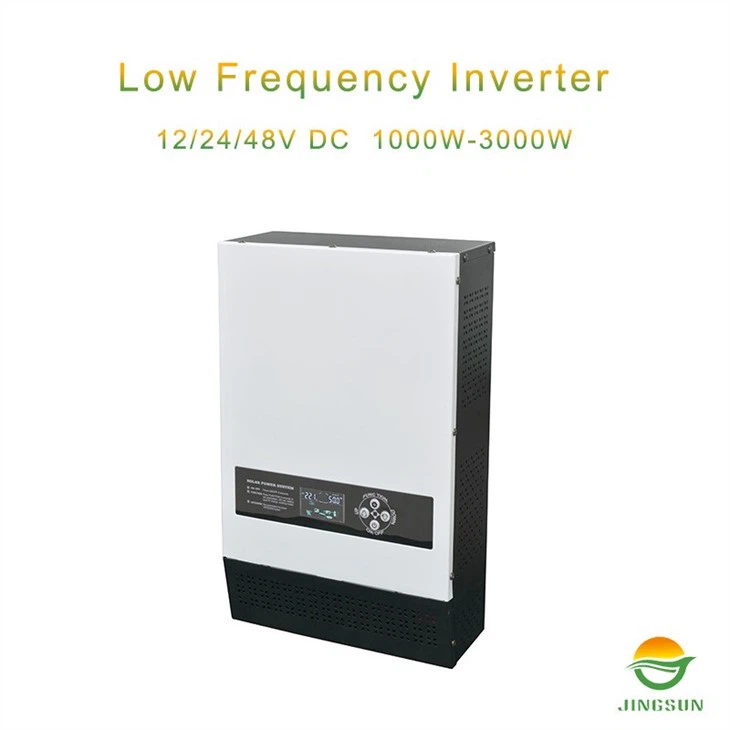
There are different types of inverters available in the market. One type is the power frequency inverter. These inverters use a large transformer to convert the DC power to AC power. They're known for their reliability and ability to handle heavy loads. You can check out our Power Frequency Inverter for more details.
Another type is the high frequency inverter. These inverters use a smaller transformer and electronic components to convert the DC power to AC power. They're more efficient and lighter than power frequency inverters. They're also better at handling high-frequency loads.
Now, let's talk about some of the applications of inverters. Inverters are used in a wide range of applications, from small portable devices to large industrial systems.
One of the most common applications of inverters is in solar power systems. Solar panels produce DC power, but most homes and businesses run on AC power. So, an inverter is needed to convert the DC power from the solar panels into AC power that can be used in the home or business.
Inverters are also used in uninterruptible power supplies (UPS). A UPS is a device that provides backup power in case of a power outage. It uses a battery to store DC power and an inverter to convert the DC power into AC power. This allows you to keep your essential appliances and electronics running during a power outage.
In the automotive industry, inverters are used in electric and hybrid vehicles. They're used to convert the DC power from the battery into AC power that can be used to drive the electric motor.
We also have some great products in our lineup, like the SG110CX. It's a high-performance inverter that's designed for on-grid applications. It's efficient, reliable, and easy to install.
If you're in the market for an inverter, there are a few things you should consider. First, you need to determine your power requirements. How much power do you need to run your appliances and electronics? This will help you choose the right size inverter.
You also need to consider the type of waveform you need. If you're using sensitive electronics, like computers and televisions, you'll want to choose an inverter that produces a pure sine wave.
Another important factor to consider is the efficiency of the inverter. A more efficient inverter will use less power and save you money in the long run.
So, there you have it! That's a basic overview of how inverters work. If you have any questions or if you're interested in purchasing an inverter, feel free to reach out. We're here to help you find the right inverter for your needs. Whether you're looking for a small inverter for your portable devices or a large inverter for your industrial system, we've got you covered.
Let's work together to find the perfect inverter solution for you. Don't hesitate to start a conversation with us about your requirements, and we'll guide you through the process.
References:

- Electrical Engineering textbooks on power electronics
- Manufacturer's specifications and documentation for inverters