

Can a 355-watt solar panel be used for powering a communication tower?
As a supplier of 355-watt solar panels, I've often been asked whether these panels can be used to power communication towers. This is a complex question that requires a comprehensive analysis of multiple factors, including the power requirements of the tower, the environmental conditions, and the efficiency and scalability of the solar panels.
Understanding the Power Requirements of Communication Towers
Communication towers vary widely in their power consumption depending on the type of equipment they house, the coverage area, and the transmission technology. For example, a small, low - power tower used for local Wi - Fi or cellular relay might consume as little as a few hundred watts, while a large, high - capacity tower with multiple base stations and advanced antennas could require several kilowatts or even more.
On average, a typical communication tower for a 4G cellular network may consume between 1 - 3 kilowatts continuously. The 5G towers, with their higher data - transfer capabilities and more sophisticated equipment, can have much higher power demands, sometimes reaching up to 6 - 8 kilowatts.
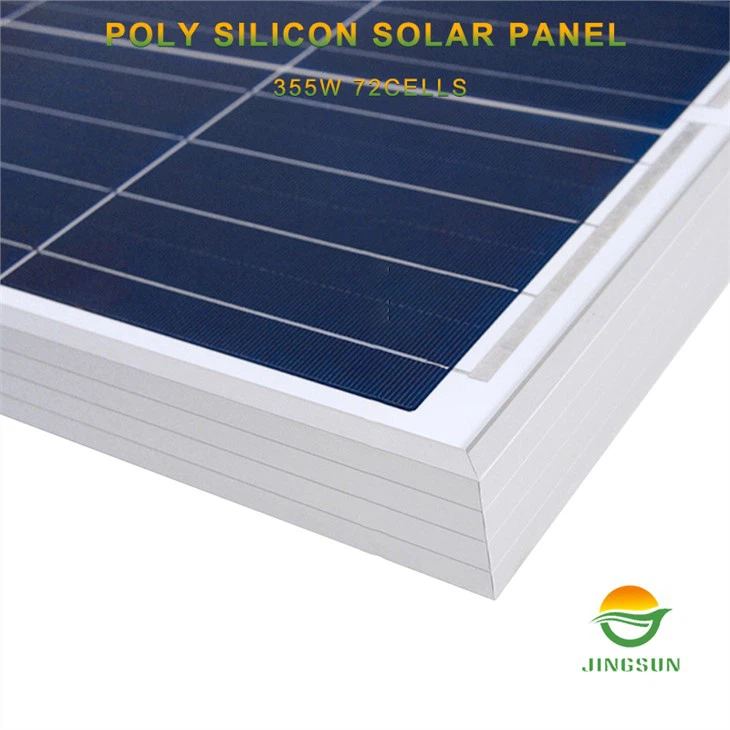
A single 355 - watt solar panel, by itself, clearly cannot meet the power needs of even a small communication tower. However, solar power systems operate on the principle of scalability. By connecting multiple 355 - watt solar panels in parallel or series, we can significantly increase the total power output.
Scaling Up the Solar Power System
To determine how many 355 - watt solar panels are needed, we first need to calculate the daily energy consumption of the communication tower. If a tower consumes 1.5 kilowatts (or 1500 watts) per hour and operates 24 hours a day, its daily energy consumption is 1500 x 24 = 36000 watt - hours or 36 kilowatt - hours.
Assuming an average of 5 peak sun hours per day (the number of hours when the solar irradiance is high enough to generate maximum power), a single 355 - watt solar panel can produce approximately 355 x 5 = 1775 watt - hours or 1.775 kilowatt - hours per day.

To meet the 36 kilowatt - hour daily demand, we would need 36 / 1.775 ≈ 20.3 panels. In practice, we would round up to 21 panels to ensure sufficient power generation. Additionally, we need to account for losses due to panel inefficiencies, wiring losses, and charge controller losses, which could require adding a few more panels to the system.
Environmental Considerations
The performance of solar panels is highly dependent on environmental conditions such as sunlight availability, temperature, and shading. Communication towers are often located in various geographical areas, from deserts to forests, and each location presents unique challenges.
In areas with high solar irradiance, such as deserts, solar panels can operate at their maximum efficiency. However, in regions with frequent cloud cover, rainy seasons, or high levels of air pollution, the actual power output of the panels will be significantly reduced.
Temperature also plays a crucial role. Solar panels typically have a rated efficiency at a specific temperature (usually around 25°C). As the temperature increases, the efficiency of the panels decreases. For example, in a hot desert environment, the panel's output may be 10 - 20% lower than the rated power.
Shading is another major issue. Even a small amount of shading on a single panel in a series - connected system can greatly reduce the overall power output. Communication towers are often tall structures, but they may still be shaded by nearby buildings, trees, or other towers. Proper site selection and panel installation are essential to minimize shading effects.
Advantages of Using 355 - watt Solar Panels for Communication Towers
- Renewable and Sustainable: Solar power is a clean and renewable energy source. By using solar panels to power communication towers, we can reduce the reliance on fossil fuels and lower the carbon footprint of the telecommunications industry.
- Cost - Effective in the Long Run: Although the initial investment in a solar power system can be high, the long - term operating costs are relatively low. Once the system is installed, the fuel (sunlight) is free, and maintenance requirements are minimal compared to traditional diesel generators.
- Remote Location Suitability: Many communication towers are located in remote areas where grid connection is either difficult or expensive. Solar panels can provide a reliable power source in these off - grid locations, ensuring continuous operation of the tower.
Other Solar Panel Options
While our 355 - watt solar panels are a great option for many applications, there are other high - power solar panels available in the market. For example, you can explore JA Solar 405W or 470W Solar Panel. These higher - wattage panels can potentially reduce the number of panels needed for a given power requirement, which may save on installation space and some installation costs. Additionally, if you are looking for a slightly lower - wattage option, you can consider Solar Panel 350w.
Conclusion and Call to Action
In conclusion, 355 - watt solar panels can indeed be used to power communication towers, but it usually requires a well - designed and properly scaled solar power system. By carefully considering the power requirements of the tower, environmental conditions, and the potential for system expansion, a 355 - watt solar panel - based system can provide a reliable and sustainable power solution.
If you are interested in powering your communication tower with solar energy or have any questions about our 355 - watt solar panels, we encourage you to reach out for a detailed consultation. Our team of experts is ready to help you design the most suitable solar power system for your specific needs.
References
- "Renewable Energy for Rural Telecommunications: A Handbook for Project Development", International Telecommunication Union (ITU).
- "Solar Photovoltaic Systems: Design and Installation Guide", American Solar Energy Society.